Here's the thing nobody tells you about penetrative pain
If penetration hurts, your body is telling you something. It's not a personal failing. It's not something you need to "push through." And it definitely doesn't mean you're broken or that your pleasure days are behind you. What it means is that right now, that particular avenue of pleasure isn't working, and you need a different route.
That's where clitoral vibrators come in. Not as a consolation prize. As the main event.
Why penetrative pain happens (and it's more common than you think)
Penetration discomfort shows up for different reasons. Sometimes it's physical. Sometimes it's emotional. Usually it's both tangled together.
Physically: Vaginismus (involuntary tensioning of the pelvic floor muscles) can make penetration feel impossible or painful. Vulvodynia is chronic pain in the vulva that makes any pressure feel sharp or burning. Endometriosis can make deep penetration feel like someone's twisting something inside you. Low estrogen from hormonal birth control, breastfeeding, or early menopause thins the vaginal tissue and reduces natural lubrication. Scar tissue from childbirth, surgery, or injury can create painful pressure points.
Emotionally: Unresolved trauma, anxiety about performance, pressure from a partner, or feeling disconnected from your body can all trigger the pelvic floor to clench defensively. Your nervous system isn't being dramatic. It's protecting you from something it perceives as a threat.
The truth is that most penetrative pain involves both elements. And that means the solution usually requires addressing both.
What clitoral pleasure offers that penetration doesn't
Here's the shift that changes everything: clitoral stimulation doesn't depend on relaxation of the vaginal canal. It doesn't require deep muscle relaxation or vaginal lubrication. It doesn't put pressure on scarred or inflamed tissue. And it activates different pleasure pathways entirely.
Your clitoris has 8,000 nerve endings, most of them in the external glans and the internal bulbs that wrap around your vulva. When you stimulate those nerves directly using a lemon vibrator or other clitoral toy, you're building pleasure from the ground up without asking anything of the structures that hurt.
For a lot of people, this feels like permission. Like finally having access to sensation without the tax of pain.
Why lemon vibrators work specifically for this situation
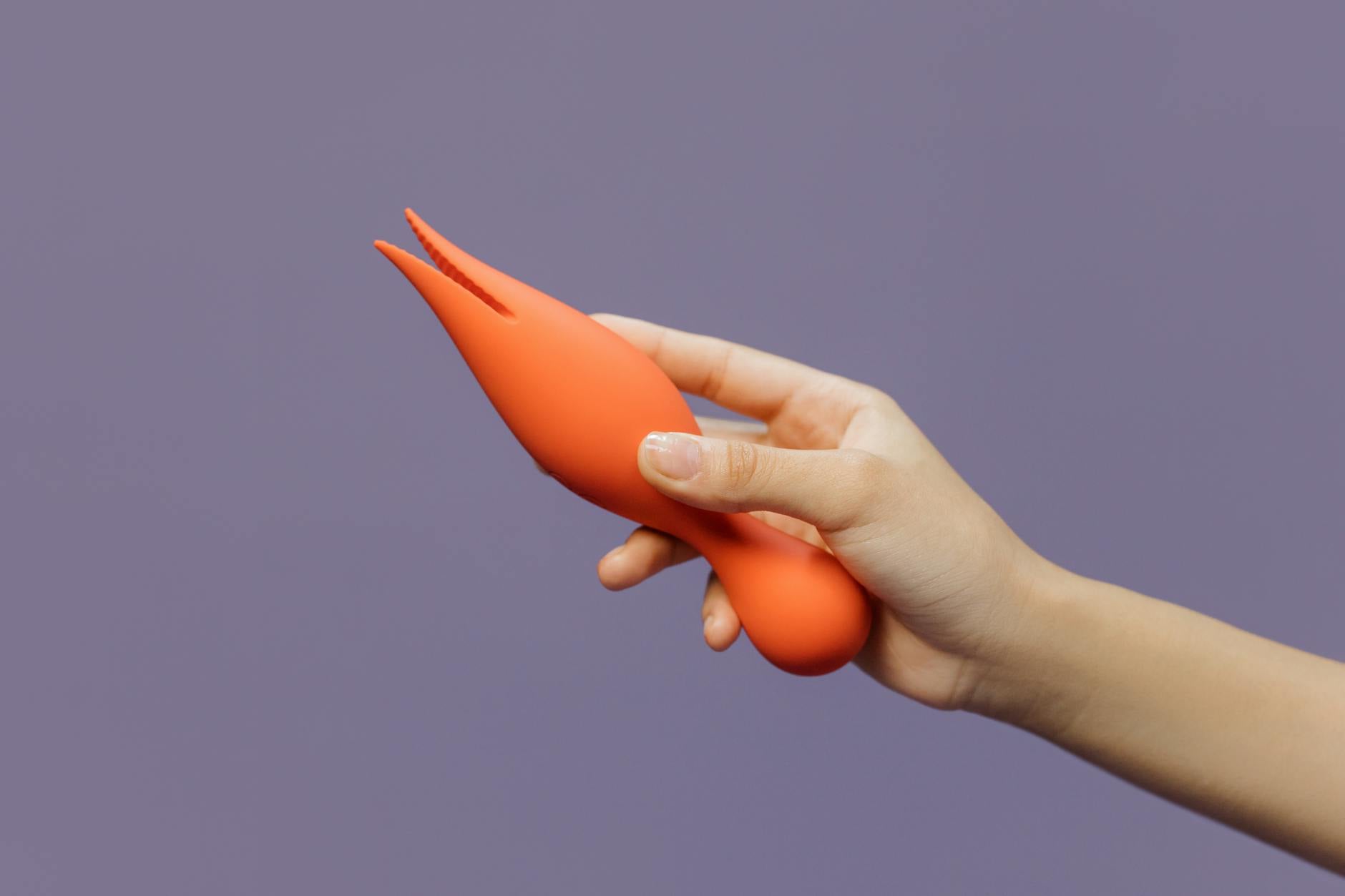
Lemon clitoral vibrators use air-pulse suction technology instead of traditional vibration. The suction gently stimulates without requiring direct pressure, which matters hugely when you're dealing with pain sensitivity.
Compare that to a traditional vibrator. A standard vibrator relies on lateral motion against your clitoris. If you're already tense or sensitive, that friction can feel too intense, too much, too painful. You end up bracing against the sensation instead of relaxing into it.
With suction, the sensation is applied through gentle rhythmic pressure rather than friction. It feels different. It feels like it's working with your body instead of against it. And because the technology doesn't require you to be deeply aroused or fully relaxed to feel good, it can actually be the thing that gets you there.
Building pleasure without penetration: the actual strategy
Here's what I recommend for people navigating penetrative pain.
Start solo. This isn't about being comfortable with a toy in front of a partner. This is about relearning what pleasure feels like when there's zero pressure. Solo sessions let you explore at your own pace without managing anyone else's reactions or expectations.
Set time aside. Not "whenever." Actual time. 20 to 30 minutes where you're not half-watching your phone or listening for someone coming home. Your nervous system needs to know it's safe to relax.
Begin with external touch. Before you pick up a toy, spend time with your hands. Massage your thighs, your vulva, your lower belly. Warm yourself up. Your nervous system needs to transition from "alert" to "this is safe." This takes longer than it should, and that's fine.
Introduce the toy slowly. Start the lemon vibrator on the lowest setting. You're not trying to orgasm right now. You're just getting familiar with the sensation. Try it on different areas: the clitoral glans, the external bulbs, the labia. Notice what feels good versus what feels intense or uncomfortable.
Breathe through intensity. If something feels strong, don't tense up. Take a slow breath in, exhale longer. Your pelvic floor will release slightly, and the sensation will shift. Tension makes everything feel worse. Breathing makes everything feel better.
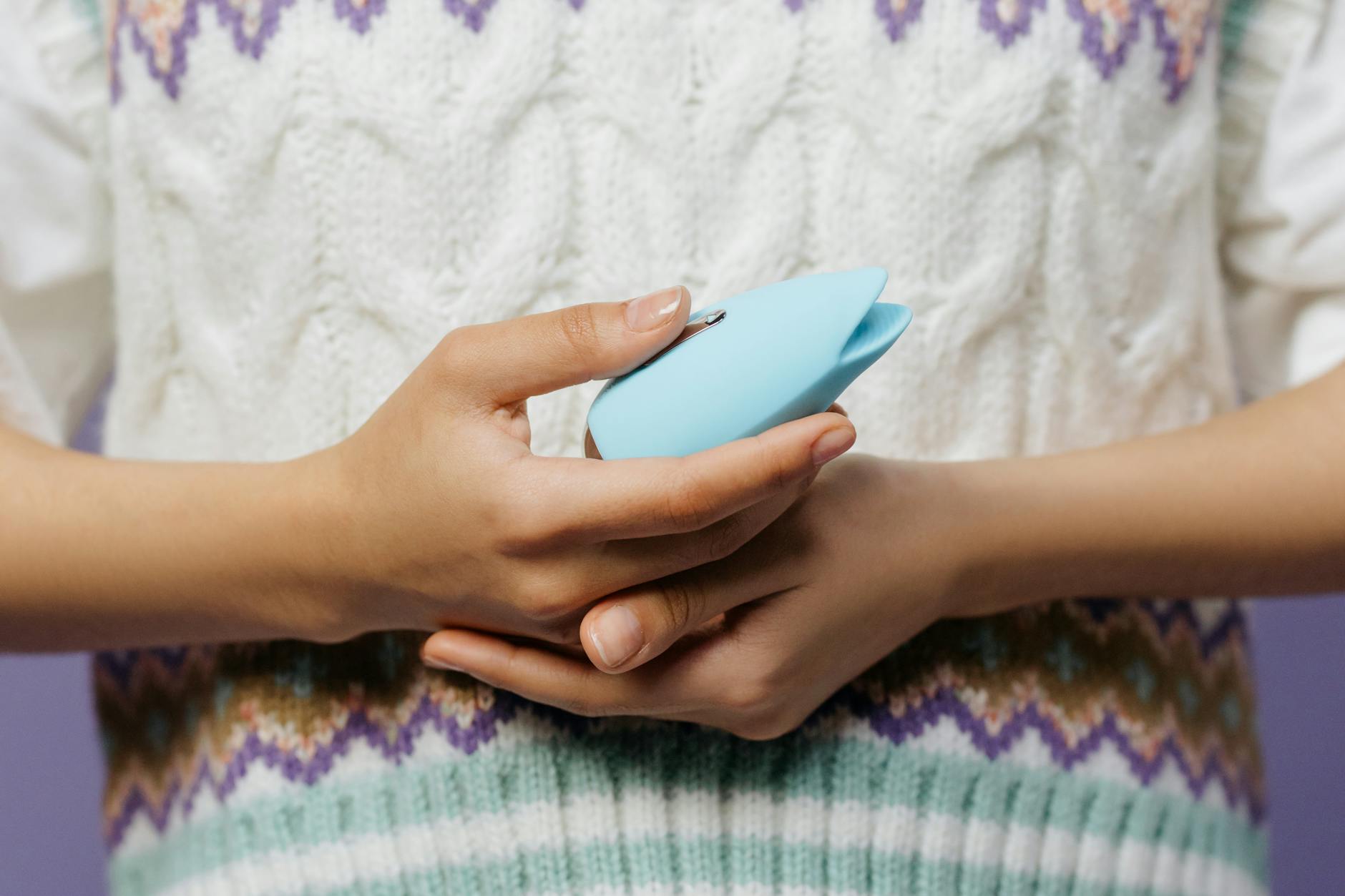
Photo by cottonbro studio on Pexels
When and how to bring a partner back in
Once you've established that you can feel good without pain, you might want to include a partner again. This requires a separate conversation.
Don't frame it as "I need to use a toy because penetration hurts." Frame it as "I want to explore what feels good for me, and that includes a clitoral vibrator. I'd love for you to be part of this." Different words, completely different energy.
You might use the toy solo while your partner is present. You might have them use it on you. You might integrate it into foreplay before any discussion of penetration even happens. The structure doesn't matter. What matters is that they understand this isn't about fixing something broken. It's about pleasure being available in multiple forms.
If your partner struggles with the toy, that's a separate conversation and often points to deeper stuff about insecurity or ideas about what sex "should" be. That's where talking openly about toys becomes essential.
What you actually need to address underneath the pain
A clitoral vibrator is a workaround, not a cure. It gets you access to pleasure right now. But if you want to eventually have penetrative sex without pain, you probably need to investigate what's actually happening.
If the pain is physical, see a gynecologist who takes your pain seriously. Not "it's all in your head" dismissal. A real evaluation. If they find nothing, ask for a referral to a pelvic floor physical therapist. They can identify if muscles are overactive or scar tissue is limiting movement.
If the pain is emotional or trauma-based, a therapist who specializes in somatic work or EMDR can help your nervous system process whatever is triggering the protective response.
Often you need both. A pelvic floor PT and a therapist working together can transform the situation in weeks or months.
The conversation with yourself
Here's what I want you to actually hear: penetrative pain is real. It matters. And it doesn't define your sexuality or your capacity for pleasure.
Some people with penetrative pain discover that they prefer clitoral pleasure anyway. They find that they never wanted penetration as much as they thought they should. Some people use clitoral vibrators indefinitely as their primary pleasure tool, penetration just a sometimes thing. Some people address the underlying cause and find penetration becomes comfortable again.
All of those outcomes are fine. The goal isn't to force yourself back into penetration. The goal is to get pleasure off the table for apology and back on the table for joy.
Using a lemon vibrator when penetration causes discomfort isn't settling. It's choosing yourself.
FAQ: Clitoral pleasure when penetration hurts
How do I know if my penetrative pain is psychological or physical?
Most penetrative pain is both. Physical factors like tissue inflammation or muscle tension create real discomfort. Emotional factors like anxiety or past trauma cause your pelvic floor to clench, which intensifies the physical pain. You can't separate them cleanly. That's why addressing both through a pelvic floor PT and a therapist usually works better than trying to fix just one side.
Can I still have orgasms without penetration?
Absolutely. The vast majority of people with vulvas don't orgasm from penetration alone anyway. Clitoral stimulation is the most reliable path to orgasm for most people. A lemon clitoral vibrator designed specifically for this is often more effective than anything penetrative ever was. You're not losing anything. You're accessing something that was probably always going to work better for you anyway.
What if I use a clitoral vibrator and the sensation feels too intense?
Start on the lowest setting. You can build up from there, or you might find that lower settings feel best. Intensity isn't the goal. Sensation that feels good is. If the suction itself feels overwhelming, try it with a thin cloth barrier between the toy and your skin, or spend more time on foreplay so you're more aroused when you introduce the toy. Arousal changes how sensation feels.
Do I need to tell my partner I'm using a vibrator for this?
Yes, eventually. You don't need to make a production of it. But if you're in a partnered relationship, honesty about what helps you feel good matters. Partners often imagine all kinds of rejection or comparison that isn't happening. A simple "this helps me feel good without pain" usually lands better than you'd expect.
If penetrative sex causes pain, does that mean I have an underlying condition?
Not necessarily. Sometimes it's situational. Stress, dehydration, hormonal changes, or a new partner can all create temporary discomfort. But if it's persistent, yes, it's worth investigating. That doesn't mean something is wrong with you. It means something in your physical or emotional landscape needs attention. A healthcare provider who takes you seriously can help narrow down what.
Can clitoral vibrators help rebuild confidence after penetrative pain has made me anxious about sex?
Completely. When penetration has caused pain, your nervous system develops an anticipatory fear response. Pleasure without that trigger helps reprogram that. Using a lemon vibrator in a context where you're in complete control, alone, at your own pace, tells your nervous system: this is safe. Pleasure is available. You're in charge. That reset often flows into other contexts once it's established in one.
What comes next
Penetrative pain is not the final word on your sexuality. It's a redirect. And redirects often lead to better destinations than you were originally heading toward anyway. A clitoral vibrator gives you access to pleasure right now, no waiting, no conditions. That matters. Use that access to remember what your body is actually capable of. Everything else builds from there.