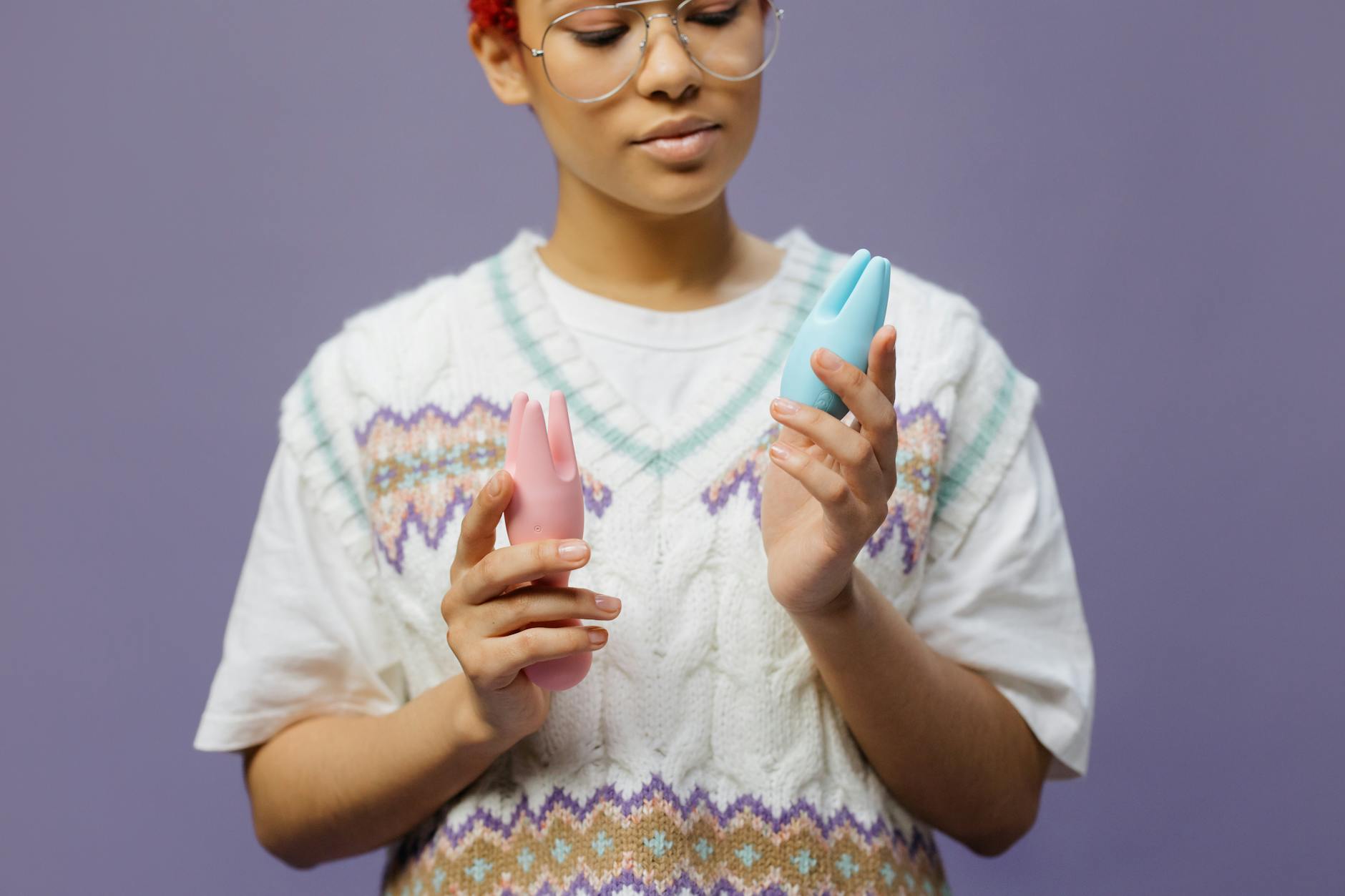
Let's talk about the thing nobody names clearly
There's a difference between your partner knowing you use a vibrator and actually watching you use one. The first is intellectual. The second is real. One happens in conversation. The other happens in your body, in real time, with them seeing everything. That shift from private to visible changes the entire nervous system dynamic, and it's worth understanding before you get there.
I work with couples on intimacy all the time, and the request usually goes like this: "I want to watch you use your lemon vibrator." Or Uno. Or whatever toy you own. The response is often silence, then anxiety. That's not a sign you shouldn't do it. It's a sign it matters, which is exactly why it's valuable.
Why your body feels different when they're watching
Your nervous system knows the difference between solo and seen. When you're alone with your lemon clitoral vibrator, your body is running a familiar program. Arousal builds in a rhythm you know. You can speed up, slow down, take breaks, restart without narration or explanation. Your pleasure lives on its own timeline.
When your partner is there, something shifts immediately. Your brain is now running two processes at once: your own arousal and your awareness of their witness. That's not a failure. It's actually useful information about how your body responds to trust and visibility.
Many people report that having a partner watch makes it harder to orgasm at first. Some find it takes longer to relax. Others say the intensity of being seen actually heightens everything. None of these are wrong. They're all normal nervous system responses to increased vulnerability.
The practical setup matters more than you'd think
Where you position yourself, how much light there is, what you're wearing or not wearing, and whether you can actually see your partner all shape the experience. I recommend starting with something simple: facing each other, enough light to actually see, and clothes on your own terms (fully clothed, partially clothed, or nothing—your call).
Lemon clitoral vibrators are ideal for this setup because they're compact and intuitive to use. You don't need to worry about complex controls or angles. That frees your attention for the actual vulnerability part, not the logistics.
Position yourself somewhere comfortable where you're not going to suddenly need to shift or adjust for pain. If you're lying down, use pillows. If you're sitting, have back support. This isn't the moment to discover that your positioning is uncomfortable.
Start with talking about it first, not during
Honestly, this is the real work. Before you're in the moment, sit down and actually discuss what watching means to each of you. For your partner, is it novelty? Desire? Curiosity about how you actually touch yourself? For you, what are you comfortable with? Do you want them to be silent, or is there something they could say that would help?
Specific questions matter: Are you okay with them asking you to speed up or slow down, or do you want to stay in charge of your own pace? Can they touch themselves while watching, or does that feel like competing for attention? Do you want feedback afterward, or do you want to just sit in the experience?
Having this conversation when you're both clothed and calm removes the pressure to figure it out in the moment. You're creating a map before you walk the terrain.
The first time is about information, not performance
There's a difference between using a lemon vibrator alone at 2 a.m. and using one while your partner watches. The goal on the first try isn't to have a perfect orgasm or prove anything. It's to gather information about what your body does when it's seen.
You might find that you don't orgasm. That's fine. You might discover that slowing down helps. You might realize you need more privacy than you thought, or less than expected. None of this is failure. It's data. Good relationships run on data, not assumptions.
Lowering the stakes actually helps. Tell your partner: "I don't know how this will feel yet. I might need to stop. I might feel awkward. And that's all okay." When they know you're not trying to perform, they can relax too. Their job isn't to be turned on or to turn you on. It's to be present with you.
What actually helps when you're being watched
Here are the things I've seen work repeatedly. Focus on sensation, not on being watched. Yes, they're there, but your attention goes to the vibration, the pressure, what your body is feeling. That narrowing of focus actually helps you settle into arousal instead of getting stuck in your head.
Breathing matters way more than you'd think. When we get nervous, we shallow-breathe. Slow, full breathing tells your nervous system you're safe, which makes it easier to build arousal. Take 5 deep breaths before you start. Then just breathe normally.
Timing also matters. If you're someone who usually takes 15 minutes to get there, give yourself that time. Don't rush because they're watching. If you're someone who comes quickly, that's fine too. Let your body do what it does.
And honestly, it helps to remember that your partner is there because they want to be closer to you. They're not there to judge. They're there because watching you feel good makes them feel closer. That's actually quite tender if you let it land.
When it goes awkward, that's still progress
You might giggle. You might suddenly feel self-conscious. You might lose arousal completely. You might want to stop after 30 seconds. All of that is okay. Awkwardness isn't failure. It's part of the process of integrating more vulnerability into your relationship.
If you need to stop, stop. Tell your partner clearly. Then, later (maybe not immediately, but soon), talk about what happened. What made it feel weird? Was there something specific, or just general vulnerability vulnerability? Did anything feel good? What would be different next time?
Every attempt teaches you something. Even the ones that feel uncomfortable usually show you something about how your body responds to intimacy, trust, or visibility that's genuinely useful.
How this changes your relationship over time
Here's what I've noticed with couples who stick with this: it becomes a way of deepening trust. You're showing your partner something deeply intimate. You're letting them see your body responding without performance. That visibility builds a different kind of closeness than sex typically does.
It also often shifts how your partner relates to your pleasure. When they see you using a lemon vibrator, they understand your body's actual rhythm and response in a concrete way. That knowledge usually translates into better partnered sex too, because they're not guessing anymore. They've seen.
And for you, being witnessed usually changes your relationship to your own pleasure. You stop treating solo time as shameful or hidden. It becomes something you can share, not something you have to hide. That's a significant shift.
FAQ
What if I can't orgasm when my partner is watching?
That's incredibly common. Your nervous system is processing the vulnerability of being seen, which sometimes blocks orgasm temporarily. Keep practicing. Most people find that the third or fourth time feels more natural. Your brain needs to learn that being watched is safe, and that takes repetition.
Should my partner touch themselves while watching?
That's entirely up to you both. Some couples find it hot and connected. Others prefer the partner to stay still and focused on watching. There's no right answer. Have the conversation and try what feels right. You can always adjust.
What if my partner wants me to use a vibrator during sex instead of watching solo?
That's a different thing, and worth discussing separately. Solo watching is about vulnerability and visibility. Using a vibrator during partnered sex is about integration and pleasure. You might want both, or you might prefer one over the other. Don't assume you have to jump to partnered use if solo watching feels more natural.
How often should we do this?
There's no schedule. Some couples do it regularly and it becomes part of their intimacy routine. Others do it occasionally, as a special thing. Follow your own rhythm. The point is that you feel comfortable and genuinely want to be doing it, not that you're checking a box.
What if I feel self-conscious about my body being watched?
That's worth naming with your partner. They're not watching your body critically. They're watching you feel pleasure, which is a completely different thing. That said, if you need lower light, or specific positioning, or clothes on, all of that is fine. Your comfort is the real foundation here.
Can we use a lemon vibrator during partnered sex if we're already comfortable with watched solo play?
Absolutely. Once you've built comfort with being seen with your vibrator, integrating it into partnered sex is often a natural next step. You already know how to use it, your partner has seen it work on your body, and now you're just bringing that into a shared experience. The vulnerability piece is already handled.
What you're actually building
When you use a lemon clitoral vibrator while your partner watches, you're not just having a sexual experience. You're building trust. You're showing your partner something real about your body and your pleasure. You're learning that visibility doesn't have to mean judgment.
That's relationship work. It's the kind of work that changes how you feel about yourself and about each other. It takes vulnerability and communication and willingness to feel awkward sometimes. And in my experience, couples who do it end up closer. Not because watching is inherently hot (though it can be), but because they've practiced being truly seen together.
If you're thinking about asking your partner to watch, or being asked to watch, lean into the conversation first. Get clear on what you both actually want. Then take your time. Your pleasure and your trust are worth getting right.