Here's what your partner is actually worried about
Let's be real. When you bring up toys, your partner isn't just nervous about the object. They're running a mental loop that sounds something like: "Does this mean I'm not enough? Are they bored with me? Is this a sign something is wrong?" None of those worries are logical, but all of them are common. The conversation matters way more than the vibrator.
I've worked with hundreds of couples on this exact tension. The ones who move forward smoothly aren't the ones with the most experience or the least judgment. They're the ones who separate the toy from the relationship talk and handle them one at a time.
What's actually happening (the neuroscience part)
Your partner's hesitation likely stems from one of three things. Understanding which one is key to the conversation.
First, cultural conditioning. Most people grew up with the implicit message that good partners should be enough on their own, and that wanting tools means something is broken. That's a myth. A vibrator doesn't replace partnership any more than a washing machine replaces handwashing because you value your clothes less. Tools enhance what's already there.
Second, sexual insecurity. If your partner hasn't had much experience with their own pleasure or with talking about bodies, toys can feel like a spotlight on something they're already self-conscious about. This one requires gentleness and reassurance, not pushing.
Third, fear of judgment. They might worry they'll do something wrong, or that you'll judge them for liking it too much, or not enough. That's about safety, not about the toy.
None of these are fixed by showing them a lemon vibrator and saying "trust me." They're fixed by conversation.
The conversation you actually need to have
Timing matters. Don't bring this up during sex or right after. Pick a neutral moment, maybe on a walk or over coffee, where you're not in bed and there's no immediate expectation.
Start with your own experience, not the toy. Try something like: "I've been thinking about pleasure lately, and I realized I want to explore some things together that I think could feel really good for both of us. I'm curious what you think about that." Notice what you didn't do: you didn't lead with the vibrator. You led with desire.
Listen for what's underneath their hesitation. If they say "I don't know, it feels weird," that's different from "I'm worried I won't be good enough." Ask clarifying questions. "What feels weird about it?" "Are you worried about something specific?" Let them tell you the actual fear before you try to solve it.
Once you know what they're scared of, you can address it directly. If it's about insecurity, you might say: "This isn't about you not being enough. It's about both of us getting to feel even better together. I want to explore this with you, not instead of you." That distinction is everything.
Don't ask for permission to want pleasure. Invite them into it. "I'd love for us to try this together. I think it could be really fun for us." That's collaborative, not combative.
Why lemon vibrators work when your partner is hesitant
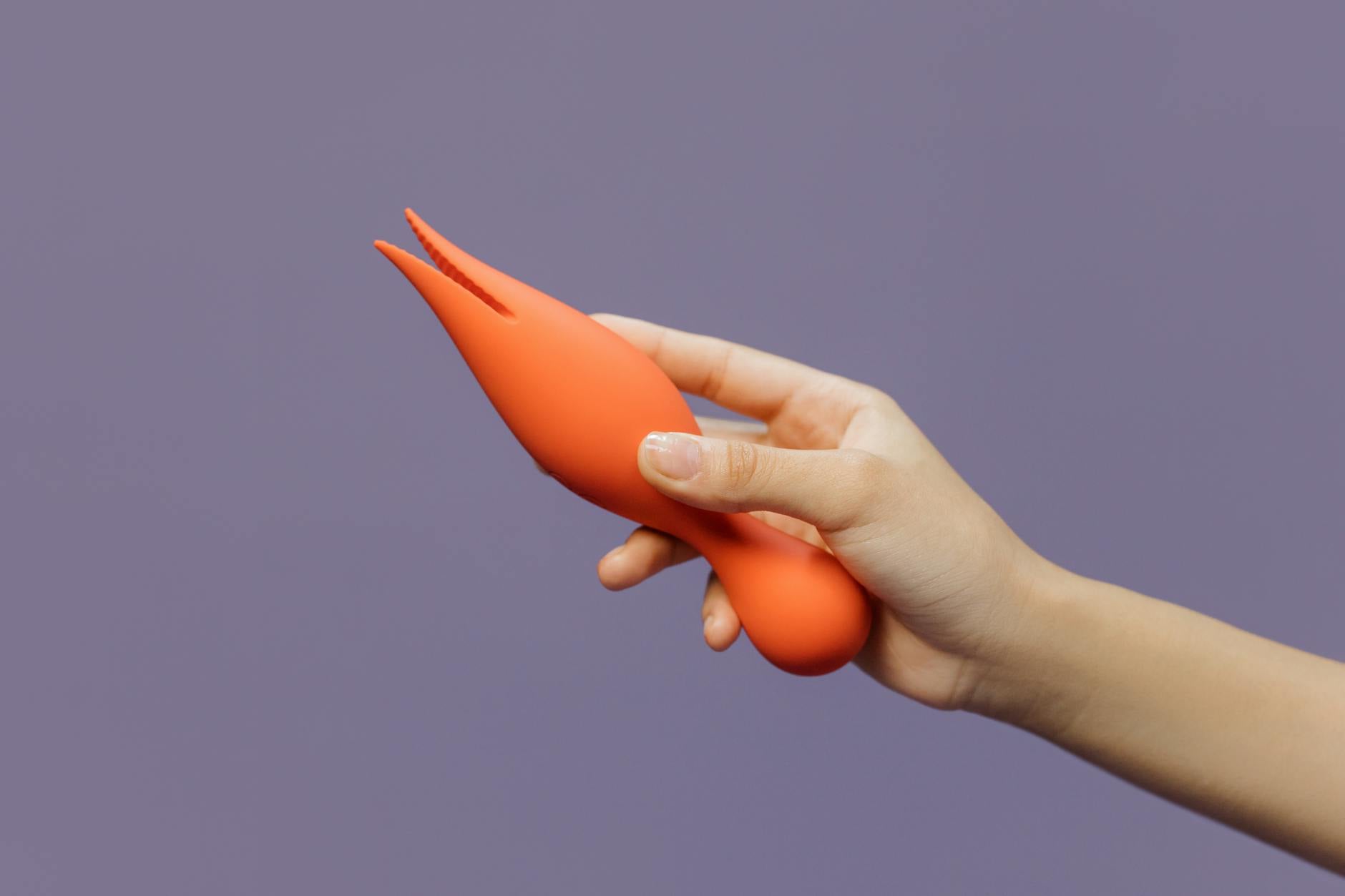
If your partner is nervous, a gentle clitoral vibrator like a lemon vibrator might be the right starting point. Here's why it matters.
Lemon suction vibrators work with sensations your partner probably already knows. They use gentle suction and rhythmic pulses instead of intense vibration, which can feel less intimidating if someone's anxious. The sensation is usually described as different from vibration in a way that feels special rather than clinical.
They're also clearly designed for pleasure, not disguised as something else. That honesty can actually reduce anxiety. Your partner isn't wondering what the device is "really" for.
Physically, the experience is hard to misunderstand. There's no learning curve, no confusion about technique. You put it where it feels good and see what happens. That simplicity can help your partner relax into the moment instead of overthinking it.
How to frame the first experience
Don't make it a big reveal or a test. Frame it as play, not performance. "I want to try something and I want you to just feel it and tell me what you think. No pressure. We can stop whenever." That last part is crucial. If your partner knows they can say stop and you'll stop, the anxiety drops dramatically.
Start with your own pleasure, not theirs. If you use it on yourself first while they watch, you're doing two things. You're showing them it's not complicated, and you're modeling that this is about your pleasure, which often relaxes partners who worry it's about them.
When they're ready to try, keep the mood light. Make jokes. Smile. If this feels clinical or solemn, their anxiety will spike. If it feels like playful exploration, they'll relax.
Starting at lower intensities is obvious advice but worth saying. Pattern 1 or 2 on a lemon vibrator is gentle enough that your partner can focus on the sensation instead of bracing against it. Speed and pressure can always increase. Comfort first.
What to do if they're still hesitant
Honestly, sometimes the timing isn't right. Your partner might need a few conversations before they're ready to try anything. That's okay. Pushing usually backfires.
Instead, keep the door open. "I'm not going anywhere with this. If you ever want to talk about it or try it, I'm here." Then let it rest for a bit.
Meanwhile, focus on rebuilding comfort with pleasure talk in general. Ask what feels good. Notice what makes them laugh. Create safety around bodies and desire outside the bedroom. Sometimes the toy conversation is actually a relationship conversation in disguise.
If your partner is struggling with anxiety, low libido, or past experiences that are making them defensive, this might be a moment to suggest couples counseling or individual therapy. A therapist can help your partner work through whatever's underneath the hesitation in a way you can't, because there's no performance pressure.
The point is this: introducing a lemon vibrator or any toy isn't really about the toy. It's about creating a partnership where both people's pleasure matters and both people feel safe saying what they want. If you build that foundation first, the toy part becomes easy.
FAQ: Partner nervousness and toys
What if my partner thinks toys mean I'm not attracted to them anymore?
This is the most common fear, and it's worth addressing directly. Tell them: "I want you more than ever. This isn't a replacement. It's an addition." Then show them. Initiate sex without the toy. Show them you still desire them on their own. Actions prove it faster than words.
Can I use a lemon vibrator on my partner if they've never had one used on them before?
Yes, but with consent and communication. Start at the lowest setting. Let them guide the intensity. Some people find clitoral vibrators overwhelming at first because of how sensitive that area is. Go slow and check in. "Does that feel good? Want me to adjust?" Turn it into a conversation, not a performance.
What if my partner agrees to try it but seems uncomfortable during?
Stop. Seriously. Put it down and ask what's happening. Sometimes people agree to things and then realize they're not ready. That's not failure. That's data. "Thanks for trying. We don't have to do this again until you're genuinely curious." That kind of respect usually makes them more willing to try again later.
Is there a way to introduce toys without having a big conversation first?
Not really. Surprising your partner with a toy is usually a bad move because it doesn't give them agency or time to process their feelings. The conversation might feel awkward, but it's better than the alternative. You're building trust, not just introducing a device.
My partner says they don't like toys but I think they might enjoy them if they tried one.
You might be right. But your partner doesn't owe you a trial run. If they say no, the answer is no. What you can do is ask what specifically makes them hesitant. Is it about the toy, or about the conversation, or about something deeper? Understanding that gives you something real to work with.
How do I know when my partner is actually ready versus just agreeing to make me happy?
Listen for genuine curiosity, not compliance. "I'm willing to try" is different from "I want to try." If they're just agreeing to keep you happy, they'll probably feel anxious or distant during. That's not fun for either of you. Ask directly: "Are you genuinely interested, or are you doing this for me?" You might not like the answer, but you'll know where you stand.
The real work is the conversation
Bringing a lemon vibrator or any adult toy into a relationship where your partner is nervous isn't about the vibrator. It's about creating space where both of you can ask for what you want without shame. That takes vulnerability. It takes listening without defensiveness. It takes patience.
If your partner is willing to have that conversation with you, even if they're scared, you're already winning. That willingness to be uncomfortable together is what builds real intimacy. The toy is just the thing you're exploring on the way to something bigger: a relationship where pleasure matters for both of you.
Ready to talk it through? Consider reaching out to a couples counselor if the conversation gets stuck, or head to the FAQ section for more relationship and pleasure questions.