Here's the thing nobody talks about enough
Your mind leaves your body during sex. It happens to almost everyone. You're in the moment, and then suddenly you're mentally reorganizing your to-do list, replaying an awkward conversation from work, or analyzing whether your partner is having a good time. By the time you snap back to sensation, the arousal has already started to fade.
It's not a sign something is wrong with you or your relationship. It's actually a really common form of attention drift that happens when pleasure isn't quite intense or specific enough to hold your focus. The good news: lemon vibrators are almost ridiculously effective at bringing your mind back where your body is.
Why your attention wanders during sex in the first place
Your brain is built to predict and plan. It gets bored easily when sensation is too diffuse or generalized. Generic broad stimulation can feel nice, but your mind doesn't have enough incoming data to stay interested. It's like the difference between watching a gripping movie and half-watching a rerun of something you've already seen.
There's also the performance layer. If you're used to managing your partner's experience, monitoring whether they're satisfied, or checking in on how you "should" be feeling, that's cognitive load that pulls your attention away from your own sensation. Your nervous system is running in manager mode, not receiver mode.
The research here is pretty clear: specificity and intensity are what hold attention. When stimulation is concentrated in one spot at varying intensities, your brain has to stay engaged. It can't wander off because there's too much novel information coming in.
How lemon clitoral vibrators bring you back
The suction action of a lemon vibrator works differently than standard vibration. It creates a sealed pocket of sensation that's both concentrated and dynamic. Your brain can't multitask through that. The stimulation is too specific, too present. It pulls you back to your body immediately.
That's not hyperbole. People describe it as an almost forced return to presence. One client told me she'd never made it more than two minutes without her mind drifting, and within a week of using a lemon vibrator, she was regularly staying present for 15-20 minutes. Not because something magical happened, but because her nervous system had something compelling enough to focus on.
The other part: when you're using a lemon clitoral vibrator solo first, you're training your brain to associate that concentrated sensation with pleasure and presence. Your nervous system learns the pattern. Then when you introduce it with a partner, your mind already knows how to drop in.
The solo practice that actually works
Start here, alone, with no pressure to reach anything or prove anything.
Week one: sensation mapping. Use your lemon vibrator on the lowest setting. Spend five minutes on just the external clitoral area. Don't try to build toward anything. Notice where the sensation feels strongest, where it feels good but subtle, where it feels too intense. Your only job is to observe. This is explicitly not about orgasm.
Week two: pattern exploration. Try each pattern available on your device, one per session, for a full five minutes. Don't skip around. Let your nervous system settle into each rhythm. Notice which patterns your attention naturally hooks onto. Notice which ones feel repetitive or dull. Your preference data matters.
Week three: integration. Use your lemon vibrator the way you actually want to. Orgasm, don't orgasm, whatever happens. But before you start, take three conscious breaths. Notice your body in the space. That tiny ritual of arrival matters.
What you're doing here is building what therapists call "window of tolerance." You're teaching your nervous system to stay present through increasing levels of stimulation. That skill transfers directly to partnered sex.
Bringing presence into partnered sex with lemon toys
If you have a partner, the conversation starts before the toy comes into the room.
"I've noticed my mind wanders during sex, and I'm trying something new that helps me stay present. I'd like to use this during our time together. It helps me feel more connected to my body, which actually means I'm more connected to you."
That framing matters because you're not saying "regular sex doesn't work for me." You're saying "this helps me show up better."
When you introduce the lemon vibrator, use it during the arousal phase, not as the finale. This isn't about outsourcing sensation to the toy. It's about using the focused stimulation to anchor your attention so that everything else (touch from your partner, sensation in your body, emotional connection) becomes more vivid too.
One pattern that works well: let your partner handle other forms of touch and kissing while you use the lemon vibrator. Your hands are free, your attention is rooted in what the toy is doing, and your partner has access to kiss your neck, hold you, whatever creates connection. You're present for all of it because the clitoral vibrator is holding the bottom part of your attention while your upper brain can be fully with your partner.
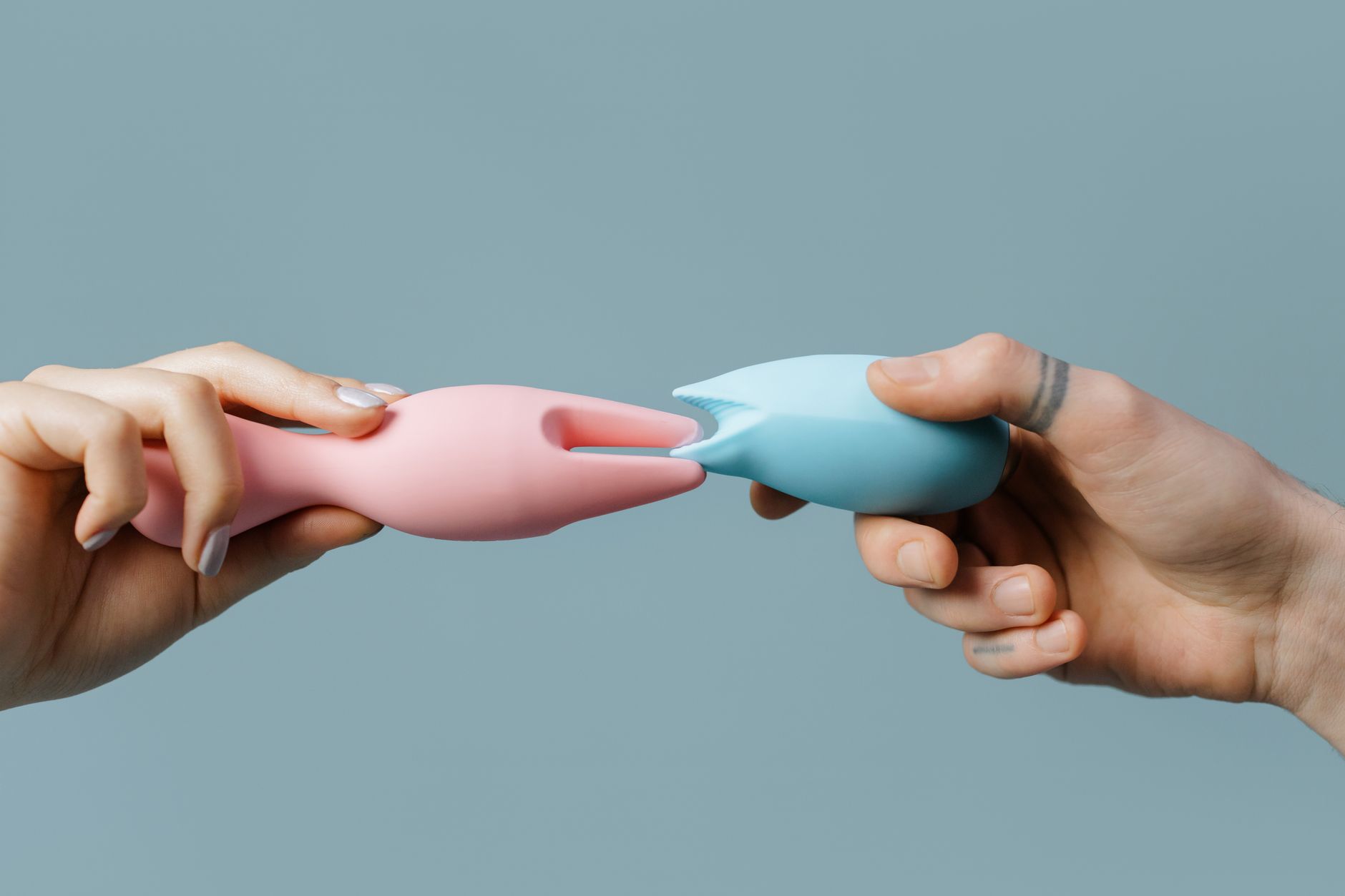
Photo by cottonbro studio on Pexels
The attention-building progression
Presence isn't a switch you flip. It's a skill you build. If you've been mentally absent during sex for years, you can't suddenly force yourself to stay focused just by trying harder.
Start with 5-10 minutes solo with your lemon vibrator. Nothing else. Phone in another room. No goal except to stay with the sensation. If your mind wanders (it will), just notice it gently and come back. No self-judgment. You're literally retraining your attention.
After a few weeks, extend to 15 minutes. Not because you're building toward orgasm, but because you're building your capacity to stay engaged.
Then when you're with a partner, you already have that neural pathway lit up. The lemon clitoral vibrator becomes the anchor that says "okay, nervous system, this is the channel we tune into." Your mind is more likely to stay.
One thing worth knowing: if your mind still wanders sometimes, that's not failure. It's just how brains work. The goal isn't perfect presence every time. It's presence more often. It's the difference between noticing your attention scattered 80% of the time and 30% of the time. That shift changes everything about how satisfying sex feels.
What changes when you actually stay present
Most people expect the main shift to be physical. More intense orgasms, more sensation, that kind of thing.
What actually happens first is emotional. When you're present with your partner during sex, the intimacy deepens in ways that aren't just about technique or stimulation. Your partner can feel that you're actually there with them. That changes the whole tenor of the experience.
Second, you notice your own pleasure more clearly. Sounds obvious, but when your mind is elsewhere, you're basically having sex on autopilot. Sensation exists, but it's muted. When you're present, pleasure becomes vivid. The same level of stimulation suddenly feels more satisfying because you're actually registering it.
Third, you become genuinely interested in your own pleasure again. If you've spent years checking out during sex, you might have started to feel like you don't really like sex that much. Often what you don't like is the experience of not being present for it. When you come back into your body, the whole thing becomes more appealing.
Troubleshooting when presence still feels hard
If you're using a lemon vibrator and your mind still seems to drift, a few things to check.
Are you resisting the pleasure? Some people have learned to push pleasure away because it feels vulnerable or selfish. If that's you, the issue isn't the toy. It's worth talking through with a therapist or coach. You might be more present than you think, but you're actively dampening the signal.
Are you distracted by actual external things? Kids in the next room, partner on their phone nearby, noise from the street. Sometimes your nervous system can't settle because you're managing other people's potential needs. That's a boundary issue, not a presence issue. Figure out how to make the space actually yours.
Is the pattern too intense? If a lemon vibrator feels overstimulating rather than grounding, try the lowest setting and build from there. Presence requires your nervous system to feel safe. If you're overwhelmed, you check out to protect yourself.
Are you checking in on your pleasure? Here's something weird: trying too hard to stay present can actually push you out. If you're constantly monitoring whether you're "doing it right," you've just swapped one form of distraction for another. Set the intention and then let it go.
People also ask
Can lemon vibrators actually help with mind-wandering during sex, or is that just a placebo effect?
It's not placebo. The suction mechanism of lemon clitoral vibrators creates concentrated, dynamic stimulation that your nervous system registers differently than general vibration. When your brain is receiving highly specific sensory input that's changing moment to moment, it has less capacity to drift into planning mode or worry. That said, intention matters. If you're just using the toy passively without actually deciding to stay present, you'll get less of this effect. The tool works best when you're actually choosing to use it as an anchor.
How long does it usually take before lemon vibrators help with presence?
Most people notice a difference within the first week of solo practice, especially if they do even five minutes daily. Your nervous system responds pretty quickly to new, compelling stimulation. The bigger shift, where it translates consistently into partnered sex, usually takes 2-3 weeks of regular practice. This isn't a permanent fix though. If you stop using the lemon vibrator regularly, the skill of staying present can fade a bit. It's like any other attention-building practice.
Is using a lemon vibrator with a partner a sign the relationship isn't working?
No. In fact, it's often a sign someone is actively investing in their own pleasure and their partner is doing the same. Some of the most connected couples I work with use toys during sex. What matters is that it's something you both want and you've talked about it. If your partner is resistant, that's a conversation worth having, and there are resources about that specifically.
What if my partner gets jealous or insecure about me using a lemon clitoral vibrator?
That insecurity is usually about the partner's fear that they're not enough, not about the toy itself. The most useful conversation you can have is: "When I'm more present in my body, I'm more present with you. This isn't about replacing you. It's about me showing up better." If the insecurity persists even after you've reassured them, that might point to deeper relationship dynamics worth addressing with a couples therapist.
Can I use a lemon vibrator if I'm on antidepressants or other medications that affect sensation?
Yes, and in fact some people find lemon vibrators particularly helpful when medication has muted sensation. The concentrated suction action sometimes cuts through numbing in a way that broader stimulation doesn't. That said, if sensation feels completely absent, that's worth discussing with your prescriber. Sometimes medication timing, dosage, or type can be adjusted.
Does using a lemon vibrator make it harder to stay present without one?
Not really, but your nervous system does learn patterns. If you only ever experience strong presence with intense clitoral stimulation, shifting to other forms of touch might feel less engaging. The best practice is to use the lemon vibrator as a training tool, not a permanent requirement. Once your brain has learned what it feels like to stay present, you can dial back the intensity gradually and still keep that skill.
The actual point
Presence during sex isn't about being in a trance or transcending your body. It's actually the opposite. It's about being fully in your body, feeling what's happening right now, not managing or performing or planning ahead.
Lemon vibrators are good at that because they give your nervous system something compelling enough to focus on that your thinking brain takes a break. If that helps you drop in, actually feel pleasure, and be present with your partner, then they're doing their job.
If you want to explore how lemon vibrators might work for you, there's no rush. The practice is the point. Start solo, notice what happens, and build from there. And if you get stuck or want to talk through what's happening in your body or your relationship, reach out. That's what I'm here for.