Let's start with the real part
Introducing a toy to a new relationship can feel surprisingly loaded. You're not just bringing an object into the bedroom. You're introducing a conversation about pleasure, preference, and what you want. That's vulnerable. It also matters more than people admit.
Here's what I see in my practice: couples who talk about toys early tend to have better sexual communication overall. Not because toys are magic, but because the conversation trains you both to say what you actually want instead of guessing.
Why the timing conversation comes first
There's a difference between "I want to introduce a lemon vibrator" and "I want to introduce it tonight." Timing isn't about waiting forever. It's about reading the relationship temperature.
Early stage (1-3 months): Too soon, usually. You're both still figuring out baseline preferences and rhythm. Adding a tool can feel like "something's wrong with what we have." Even if that's not what you mean, it's what gets heard.
Established comfort (3-6 months): This is the sweet spot for most couples. You've had enough sex that you know what works for both of you. You've probably had at least one awkward moment or misalignment. A conversation about toys lands as "let's expand what we already like" rather than "I'm bored."
Years in: If you haven't mentioned toys yet, now is actually a great time. Relationships that hit a plateau often rediscover each other through new shared experiences.
The common mistake: waiting until you're frustrated with your sex life. That makes the toy feel like a bandage instead of an invitation.
How to actually bring it up
Three things that work:
Own your interest directly. "I've been curious about trying a lemon vibrator" works better than "some people use toys." Specificity signals confidence. It tells your partner you've thought about this, not that you're workshopping ideas.
Make it about sensation, not performance. The difference: "I want to try this because I think it'll feel amazing" versus "I want to try this because I need help coming." One is invitation. One sounds like criticism of what's already happening.
Give them space to ask questions. Don't script their response. Let them sit with it. Most people feel some version of "is this about me?" even if they don't say it. Give them room to ask directly.
What usually happens: they either want to try it immediately, need a few days to think about it, or have concerns (it's going to feel weird, they're worried about being replaced, they need to know what it's for). All of these are normal. None of them means your partner isn't interested in your pleasure.
The trust bridge before you start
If your partner has hesitations, skip the toy for now. I mean this seriously. Using it while they're uncomfortable doesn't build intimacy. It builds resentment, usually quiet.
Instead, ask what specifically worries them. "Does it feel like I'm not attracted to you?" "Are you worried it'll hurt?" "Do you think I'll prefer it to you?" Those are conversations worth having. They're also the ones that strengthen a relationship most.
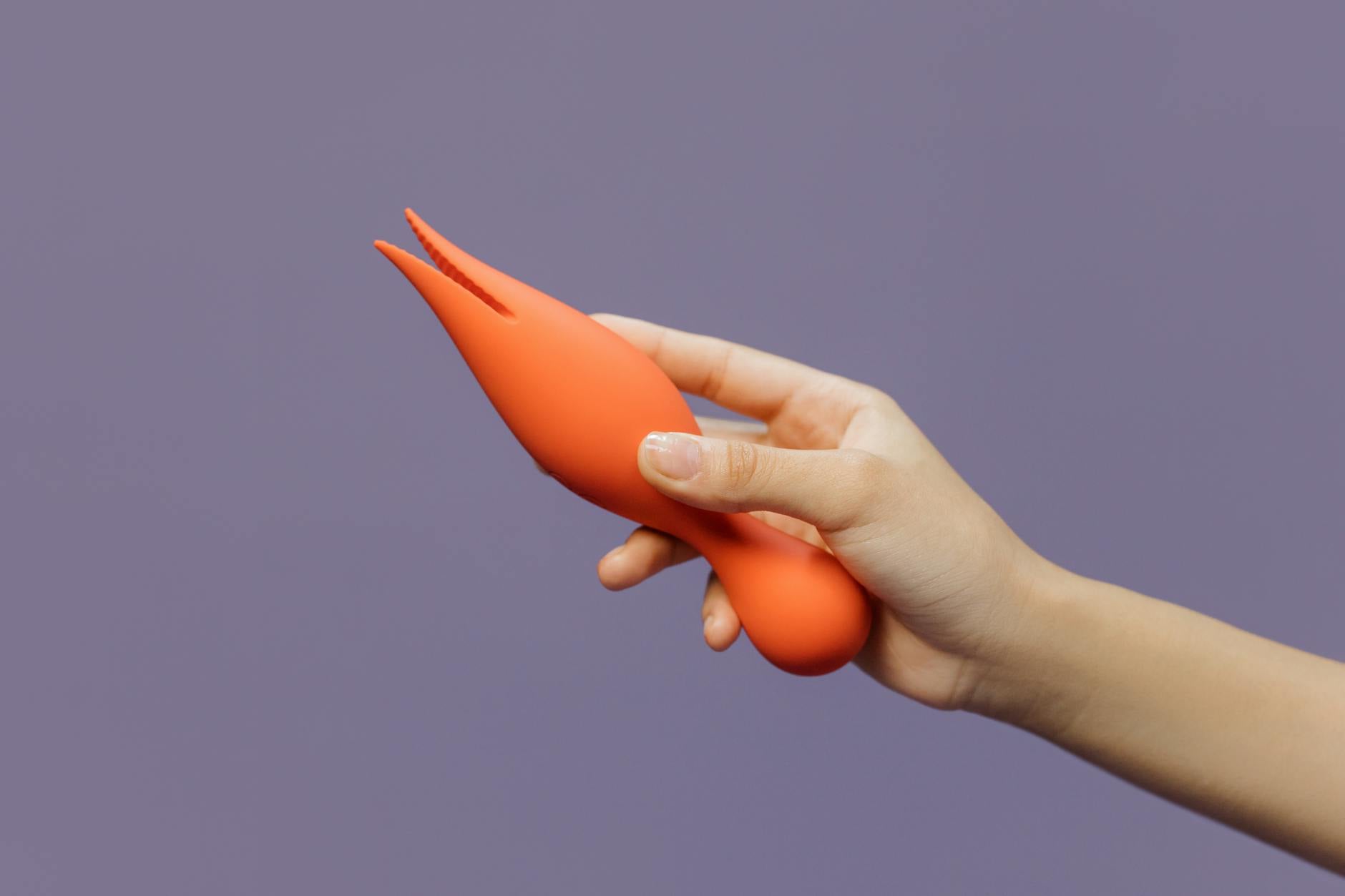
A lemon vibrator does one thing: it applies suction and gentle pulse to your clitoris in a way most fingers and mouths can't quite replicate. That's it. It's not better than partnered sex. It's different. If your partner understands that difference, they usually relax.
How to introduce it when you're both ready
Don't start with it inside the bedroom. Seriously.
Show your partner the toy outside of sex first. Let them hold it, turn it on, see how it works. Demystifying it matters. When people understand the mechanism, it stops feeling mysterious or threatening.
When you do use it together, here's the shape that works:
Start with your partner involved. Not watching. Involved. That means your partner is touching you, kissing you, paying attention to your face and breath while you use the lemon vibrator. You're not just lying there while it happens to you. You're together in the experience.
Use it on the lowest setting first. The Lem has several patterns. Start at level 1 or 2. Let your partner see how your body responds. This does two things: it builds their confidence (oh, this is what turns you on) and it gives you a chance to adjust to the sensation.
Talk during, not just after. "That feels good." "A little lower." "Keep doing that." Your partner needs real-time feedback. This is where a lot of couples get stuck. People assume silence means it's working. It often just means someone's too shy to speak.
Make it about both of you feeling good. This matters more than orgasm. If you come, great. If you don't, it's still worth it because you both learned something. I see couples get caught on "did she finish" when the actual win was "we did something new together and she felt safe."
What happens after the first time
Some couples will use a lemon vibrator regularly. Some will try it once and stick with other patterns. Both are fine. The point isn't frequency. The point is that you've now had a conversation about pleasure and you've acted on it together.
What I often see: one partner becomes more curious about their own pleasure after this. They might ask about other kinds of stimulation, different positions, new timing. The toy isn't magic. But it often opens a door that was closed before.
If it doesn't feel good or you want to stop using it, that conversation is just as important. "This isn't working for me" or "I want to go back to how we were" are both valid. Don't push it because you're embarrassed about introducing it. Relationships that thrive are the ones where you can say "this experiment didn't land" and move on.
The shift that matters most
Here's what I tell couples: the lemon vibrator or any toy is actually just an excuse to have a conversation you should be having anyway. What do you want? What feels good? What are you curious about? What's off-limits?
Those conversations happen a lot more smoothly once you've already used a toy together. There's less shame attached. You've already been vulnerable. The next question feels easier.
The toy is a tool. The conversation is the intimacy.
If you want more guidance on building trust in a new relationship or navigating pleasure conversations with a partner, that's exactly what coaching is for. Reach out anytime.
FAQ
Is it normal to feel embarrassed introducing a toy to a new partner?
Completely normal. You're literally asking someone to see a part of you that you might have kept private before. That's a big ask, even when it's exciting. The embarrassment usually fades the second they respond positively. What helps: remember that introducing a toy is actually a sign of trust. You're saying "I want to share my pleasure with you." That's a good thing to communicate.
What if my partner says no to using a toy together?
Respect the no. A forced yes creates resentment. Instead, ask what the hesitation is. Is it a timing thing? A specific concern? A preference for how you explore together? Sometimes people need more time. Sometimes they need a different conversation. Sometimes they're genuinely not interested and that's their boundary to hold. A healthy relationship means you can want different things and still move forward.
How do I know if my partner is actually into it or just doing it for me?
Ask directly. "Are you enjoying this?" "Does this feel good?" "Do you want to keep going?" Most people can feel the difference between genuine enthusiasm and compliance. Watch their body. Are they relaxed or tense? Are they engaged or going through motions? If something feels off, pause and ask. The conversation is always better than the assumption.
Can using a lemon vibrator together help a relationship that's stalled?
It can open conversations that help. It's not a fix for bigger issues like resentment, poor communication, or mismatched values. If your relationship needs help beyond the bedroom, consider working with a therapist first. Then toys and new experiences can feel like genuine exploration instead of a desperate attempt to fix things. The order matters.
What if one partner wants to use the toy and the other doesn't?
Both things can be true. One partner can be curious. The other can be neutral or hesitant. You don't have to both want the same things at the same time. What helps: separate the conversations. "I'm interested in exploring this" is different from "I need you to be interested too." One is about your pleasure. The other is about making it mutual. Sometimes you explore alone. Sometimes you wait for your partner to feel ready. Both are okay.
How often should we use a toy once we start?
There's no rule. Some couples use a lemon vibrator regularly. Others try it a handful of times. Some people use it solo and never with a partner. The healthiest couples are the ones who check in with each other about what they want, not the ones following a schedule. If it feels good and you both want it, use it. If the novelty wears off, that's fine too.