Let's start with what nobody tells you
Antidepressants save lives. They also mess with orgasms. That's not weakness, depression, or your relationship's fault. That's medication doing exactly what it's designed to do. SSRIs (the most commonly prescribed class) work by increasing serotonin availability in your brain, and that same mechanism that lifts mood also dampens the neural signals that trigger arousal and orgasm. Roughly 40 to 60 percent of people on SSRIs report some form of sexual side effect. You're not alone, and you're not broken.
The good news: it's fixable. And lemon vibrators, specifically air-suction clitoral vibrators like the Lem, are one of the most effective tools I recommend to clients navigating this exact friction.
Why antidepressants change sensation
Here's the mechanism in plain terms. SSRIs increase serotonin, which is helpful for mood regulation. But serotonin also inhibits dopamine and norepinephrine, the neurotransmitters most directly involved in sexual arousal and orgasm. Think of it like turning up one volume knob while another dial automatically lowers. The brain prioritizes mental stability over sexual response. That's the trade-off.
Additionally, some antidepressants can reduce genital blood flow and lower baseline genital sensitivity. Arousal takes longer to build. Orgasm becomes harder to reach, or when it arrives, it feels muted or distant.
The timeline matters too. For many people, sexual side effects peak in the first 2-4 weeks and improve slightly over months. For others, they plateau and stay. If you're 6+ months in and still struggling, that's not you adjusting anymore. That's the medication's ongoing effect.
What lemon vibrators do differently
Standard vibrators rely on fast oscillation to trigger sensation. When your baseline sensitivity is already dampened by medication, you need more intensity or longer stimulation to feel anything. That exhausts you.
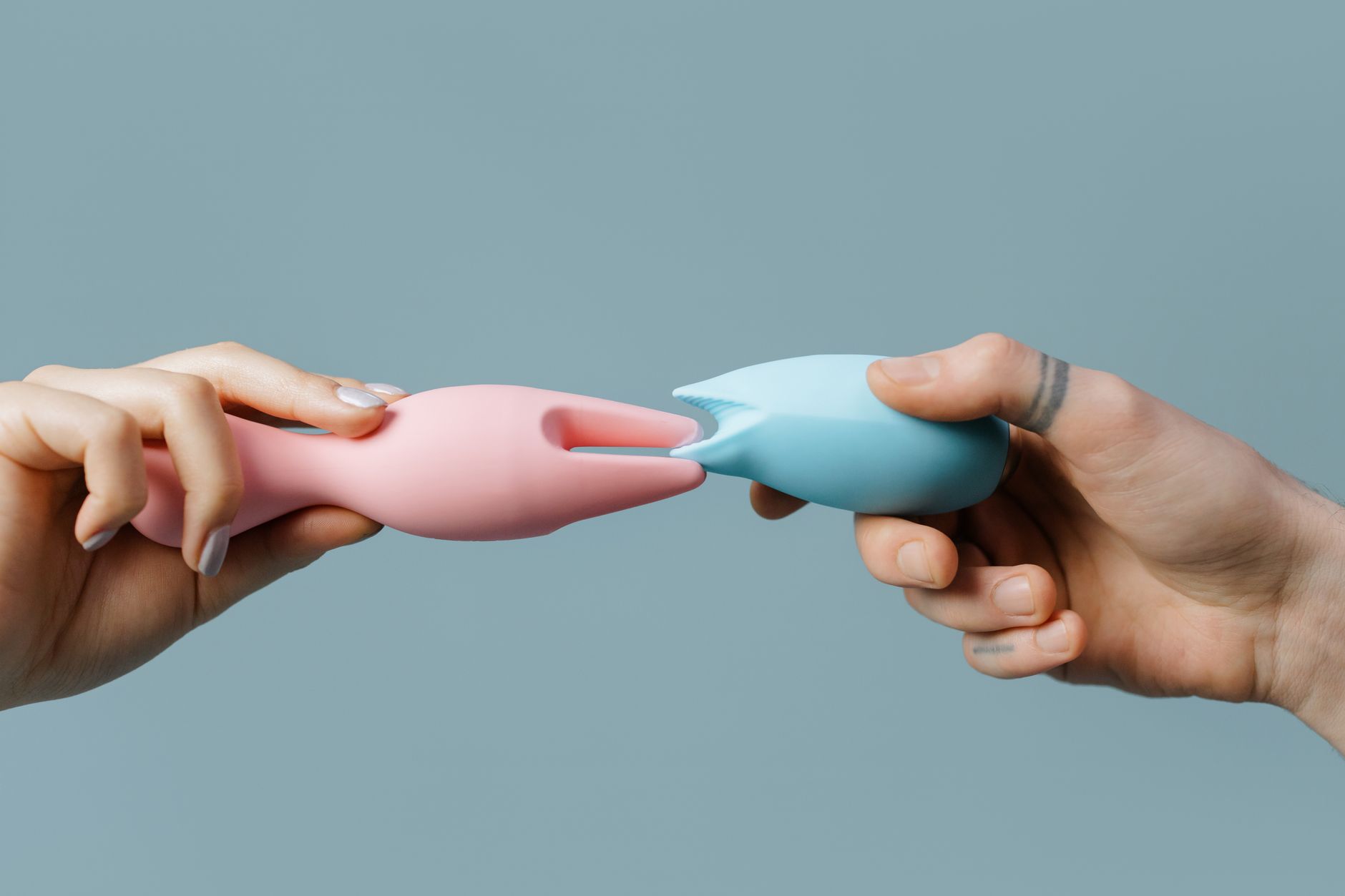
Lemon clitoral vibrators work via air-pulse technology. Instead of vibration, they use gentle suction waves that stimulate a much larger nerve cluster across the clitoral tissue. This matters because:
You're engaging more neural pathways at once, so you need less raw intensity to generate sensation. The stimulation feels different from vibration, which can help your brain "wake up" to pleasure after months of numbness. The pattern is rhythmic but not linear, so it's harder for your body to habituate (that flattening feeling where the same toy stops working over time).
In my clinical experience, people on SSRIs who switch to air-suction devices report reconnecting with sensation within 1-3 uses. Not every person, but consistently enough that I lead with this option.
Timing and dosing matter more than you think
Here's where most people miss leverage. Antidepressant levels in your bloodstream fluctuate based on when you take the dose and when the drug metabolizes. For most SSRIs, peak concentration happens 4-8 hours after ingestion.
If you take your medication in the morning, your blood levels are highest during the day and begin dropping by evening. Your sensitivity is likely highest 12-16 hours after dosing, often late evening or night.
If you take it at night, sensitivity may be lowest in the morning and improve by late afternoon.
This isn't foolproof. Individual metabolism varies wildly. But tracking when you feel most "present" or responsive over a week or two can reveal a window where pleasure is slightly easier to access. Use that window intentionally.
Also, taking your lemon vibrator (or any pleasure-focused activity) consistently at that same time trains your body and brain to expect arousal then. That anticipation alone starts rebuilding neural associations that medication has dampened.
The warm-up protocol that actually works
Antidepressants often extend the arousal phase. You can't skip this. Trying to rush straight to orgasm is like running a sprint without warming up.
I recommend this sequence: Start with 10-15 minutes of non-genital touch. This could be massage, kissing, or just being physically close. You're not trying to feel aroused yet. You're reactivating the parasympathetic nervous system (your rest-and-digest mode), which is often suppressed by both depression and SSRI medication.
Then move to genital touch without the vibrator for another 5-10 minutes. Manual stimulation, partnered touch, whatever feels good. You're coaxing blood flow back to the area.
Now introduce the lemon vibrator at the lowest setting. Spend 5-10 minutes exploring, not chasing orgasm. Notice texture, temperature, which patterns feel interesting. Your job is sensation, not climax.
Only after all that do you increase intensity or speed up rhythm if you want to.
This whole protocol takes 20-30 minutes. That sounds long, but it's actually shorter than the time many people on SSRIs spend frustrated and trying to force an orgasm that won't come. Being systematic removes the mental exhaustion.
Medication timing and pleasure: talking to your doctor
Here's the conversation most people skip: asking their prescriber whether timing or dosage adjustments might help.
Some antidepressants have shorter half-lives, meaning they clear your system faster. Switching from a twice-daily to a once-daily formulation, or vice versa, can change when side effects peak. Some doctors will suggest taking the dose a few hours later or earlier to shift when suppression is worst.
Dose reductions sometimes help, though of course your provider needs to weigh that against depression relapse risk.
And some people benefit from augmentation: adding a second medication that counteracts sexual side effects. Bupropion (which increases dopamine) is sometimes added for exactly this reason. Buspirone and mirtazapine are also options depending on your situation.
Your doctor can't know this is affecting you if you don't say it. Sexual side effects are medical side effects. They deserve the same problem-solving as any other.
Partnered pleasure after antidepressants
If you have a partner, they need to know what's happening. "I'm having trouble reaching orgasm" can sound like "I'm not attracted to you" or "You're not doing it right" if context is missing.
The truth is different. Your brain chemistry has shifted. Your pleasure machinery is intact, just running slower. That's information your partner needs to not take it personally.
What helps: tell them roughly how long foreplay needs to be now. Let them know you might not reach orgasm and that's okay, or that you want them to switch techniques or use a lemon vibrator together.
If you're using a lemon clitoral vibrator with a partner present, that changes the dynamic. Some people find it easier to stay focused when a partner is close by, touching them elsewhere. Others need space. That's not a fixed rule. Pay attention to what actually works for you.
One thing I've seen repeatedly: couples who navigate SSRI side effects together often rebuild intimacy that was lost to depression itself. Depression isolates you. Working through medication side effects together can actually deepen connection.
When sensation is still muted after weeks
If you're consistent with the warm-up protocol and the lemon vibrator, and you're still not feeling much after 3-4 weeks, a few things to check.
First, are you still in the acute side effect window? Most peaks within the first month, but some people don't stabilize until 8-12 weeks. Patience sucks, but it's part of the timeline.
Second, is stress compounding the numbness? Anxiety and depression both suppress arousal independently of medication. If work is a nightmare or your relationship is tense, your body will prioritize survival over pleasure. Address what you can.
Third, consider whether this particular antidepressant is a fit. Some medications have less sexual impact than others. Bupropion and mirtazapine are sometimes associated with fewer sexual side effects than SSRIs. But switching carries its own risks. This is a conversation with your psychiatrist or GP, not something to solve alone.
The permission you actually need
Here's what I tell every client on antidepressants trying to reclaim pleasure. Your desire to feel good during sex is not selfish. Your pleasure matters as much as your mental health. And using a tool like a lemon vibrator isn't a failure or a workaround. It's smart problem-solving.
Some people feel shame about "needing a vibrator" after starting medication. That's old messaging. You're not broken. You're resourceful. You took a medication that saved your mental health. Now you're using a device designed specifically to work with your current neurobiology. That's exactly how this is supposed to work.
Your pleasure deserves the same care and intention you give to your mental health. They're not in competition. They're connected.
People also ask
How long after starting antidepressants do sexual side effects usually appear?
Most people notice sexual side effects within the first 1-4 weeks of starting an SSRI or similar medication. For some, they're immediate. For others, they build gradually over the first couple of weeks. Peak impact often comes around week 3-4. Some side effects improve after 2-3 months as your body adjusts. If you're still experiencing significant numbness or delayed orgasm after 8+ weeks, it's worth discussing with your doctor whether your dose or medication choice is optimal for you.
Can I use a lemon vibrator while I'm adjusting to a new antidepressant?
Yes, absolutely. In fact, I recommend it. Lemon clitoral vibrators help you stay connected to sensation and pleasure during the adjustment period when side effects might be most pronounced. Using them consistently can also help your body and brain maintain sexual response pathways that medication might otherwise suppress. Just be patient with yourself. Adjustment takes time, and lemon vibrators are a tool to support you through that, not a substitute for medical management.
Will my sexual side effects ever go away if I stay on antidepressants?
For some people, yes. Many experience partial improvement after 2-3 months as the brain adjusts. For others, sexual side effects plateau and remain while on medication. This varies by person, medication type, and dose. If you've been on your current medication for 3+ months and side effects are unchanged or worsening, that's worth raising with your prescriber. Sometimes dose reduction, switching to a different medication class, or adding an augmentation helps. Sometimes acceptance plus good tools (like a lemon vibrator) is the best path forward.
Is it normal to need longer warm-up time on antidepressants?
Completely normal. SSRIs often extend the arousal phase, meaning it takes longer for your body and brain to shift into a receptive state. This isn't a sign that something is wrong. It's a known pharmacological effect. The warm-up protocol I described earlier accounts for this. You're not rushing or failing. You're working with your current neurobiology.
Can I combine lemon vibrators with other techniques to make orgasm easier?
Yes. Many people find that combining air-suction stimulation with partner touch, specific fantasies, or pelvic floor engagement helps. Some use a lemon vibrator while their partner touches them elsewhere. Others use fantasy or erotica to engage the mental component of arousal more fully. Experiment. What works for you might be different from what works for someone else. The point is layer your approaches so you're engaging multiple pleasure pathways at once.
Should I tell my partner I'm using a lemon vibrator because of antidepressant side effects?
I'd recommend honesty, yes. Not to apologize or explain away your pleasure, but so they understand what's happening. "I'm experiencing sexual side effects from my medication. This vibrator helps me feel sensation again, and I want us to stay connected" is very different from silence that might feel like rejection. Some partners want to be involved. Others are fine with you using it solo. Either way, transparency builds trust. And if your partner takes it personally, that might be worth exploring in couples therapy or general conversation about how you both navigate this shift.
Final thought
Antidepressants and pleasure aren't enemies. They're just in conversation with each other. A lemon vibrator is how you join that conversation with intention and care. You deserve both mental health and sexual satisfaction. You don't have to choose. You get to have both.