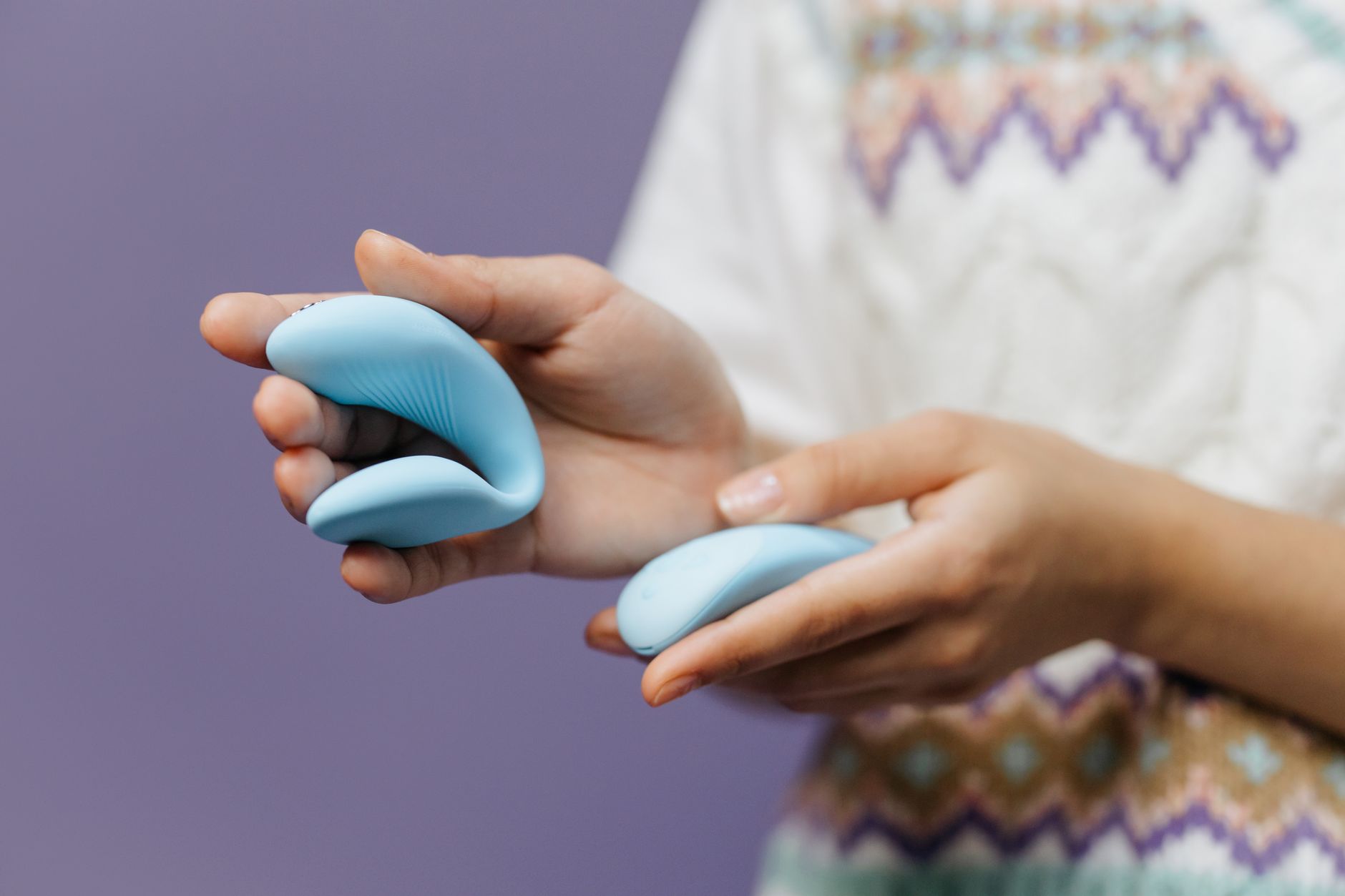
When did toys become the opposite of intimacy?
Here's what I hear in my office: "I want to feel close to my partner again, but toys feel like admitting something's broken." Or the flip side: "My partner wants to introduce a toy and I'm worried that means they're not satisfied with me." Both fears live in the same place. Neither is true.
The real thing that breaks connection isn't introducing a toy. It's the silence around why you want to. Lemon vibrators, like any tool for pleasure, become a bridge to deeper intimacy when you use them as conversation starters, not shortcuts.
What actually kills closeness (spoiler: it's not toys)
Intimacy erodes when partners stop being curious about each other's bodies and desires. It dies in the gaps where conversation should happen. When you and your partner avoid talking about what feels good because it's awkward, or because someone's worried about being judged, you're not protecting the relationship. You're starving it.
Toys enter that silence in two ways. One: they become a taboo thing nobody mentions, which deepens the distance. Two: they become a genuine conversation starter, which can rebuild it.
The couples I work with who've successfully reintroduced pleasure into a cooling relationship didn't do it by buying a toy and hoping. They did it by having an actual conversation first.
Starting the conversation (the part everyone skips)
Okay, so you want to explore lemon vibrators together but the thought of bringing it up makes you want to hide. Fair. Here's a framework that actually works.
Don't lead with the toy. Lead with the feeling. "I've noticed we haven't felt as connected physically, and I miss that. I'd love to find ways we can explore pleasure together that feel good for both of us." That's the opening. Not "I want to buy a vibrator." The vibrator is the solution, not the thing you're trying to fix.
If your partner brings it up and you feel defensive, pause the impulse to say no immediately. Curiosity first. "What made you think about this?" or "What are you hoping would be different?" Listen to what's underneath. Often they're not saying "You're not enough." They're saying "I want us to prioritize this together."
Once you're both in the conversation, the practical part gets easier. You can talk about what appeals to you. The gentle suction of a lemon clitoral vibrator feels different from direct vibration. It's sensory but not overwhelming. That matters to people who've felt disconnected from their bodies or who want slower, more intentional pleasure.
The first time using lemon vibrators together
Don't make it a performance. That's the golden rule. This isn't about achieving something. It's about rediscovering what feels good when you're both paying attention.
Start small. One of you might hold the lemon vibrator on the other. Keep your hands touching. Keep talking. "Does this feel okay?" isn't clinical. It's intimate. You're checking in. You're prioritizing their sensation over your own script of what should happen.
Speed matters less than presence. If one partner is using the lemon suction toy on the other, they're learning their partner's body in real time. They're watching what makes them respond. That's attention. That's what reconnects people.
If you're both feeling awkward, that's normal. Laugh about it. Seriously. The couples who've rebuilt the strongest connections are the ones who could be a little silly together while also being vulnerable.
When one partner wants it and the other doesn't (yet)
This comes up a lot. One person is curious about exploring with lemon vibrators. The other is hesitant, worried, or just not interested.
First, never push. Ever. That erodes trust faster than anything. Second, find out what the hesitation actually is. Sometimes it's not about the toy. It's about feeling pressured, or worrying they're not enough, or genuine discomfort with the idea of toys in their relationship. Those are three different problems with three different solutions.
If someone's worried they're not satisfying their partner, that's a reassurance conversation. "I'm attracted to you. I enjoy our sex. I'm curious about something new" is different from "I need this because you're not enough." Say the first one out loud.
If someone's uncomfortable with toys philosophically, explore why. Some people have deep beliefs about what sex should look like. That deserves respect. But also ask yourself: is that belief something you both genuinely share, or is it something you're assuming your partner believes?
If someone just isn't interested right now, that's okay too. You can revisit in six months or a year. Pressure doesn't make curiosity happen.
Why lemon vibrators specifically help rebuild connection
The design of a lemon clitoral vibrator is intentionally different from traditional vibrators. The suction action feels more like sustained stimulation than buzzing intensity. That changes the experience in ways that matter for reconnecting couples.
When both partners are present and paying attention, the gentler sensation of a lemon sucker toy creates space for conversation and touch. You're not white-knuckling toward an orgasm. You're exploring together.
Also, they're small enough that partnered use feels natural. One person can hold it while the other touches them elsewhere. You stay connected. You can kiss. You can maintain eye contact. That's not a small detail. That's the whole point.
After: the conversation that actually matters
You used a lemon vibrator together. Now what?
Talk about it. Not in a clinical debrief way. Just. "I liked that." "That felt different." "I want to try that again." If something didn't work, say that too. "The angle felt weird" or "I got in my head" are real feedback, not failures.
The couples who sustain intimacy after reintroducing toys are the ones who keep talking. They check in regularly. They ask what their partner wants. They notice when desire shifts. They don't assume.
Some couples find that using lemon vibrators together becomes a regular part of their intimate life. Others use them occasionally. Some discover that the conversation itself was the reconnection, and toys become less central. All of those are fine.
What matters is that you've reopened a door that was closed. You've made it safe to be curious about pleasure together.
When to call in help
If you've tried talking and one partner is still resistant, or if the conversation triggers deeper relationship problems, a sex-positive therapist can help. This isn't about forcing anyone to use toys. It's about understanding what's underneath the resistance and rebuilding trust around intimacy.
Sometimes what looks like a toy problem is actually a communication problem or a deeper wound. A trained professional can help you figure out which one you're dealing with.
Connection isn't something you build once and keep forever. It requires ongoing attention, curiosity about each other, and willingness to explore together. Lemon vibrators are just one tool for doing that. The real work is showing up with your partner and saying: I want to understand your pleasure. I want you to understand mine. Let's figure this out together.
FAQs
What if my partner thinks toys mean I'm not satisfied?
You might say: "I love having sex with you. I'm also curious about exploring something new together. Those aren't opposites." Reassurance without pressure. Make it about expanding what you share, not replacing what you have. If the worry persists, that might point to a larger vulnerability in the relationship worth exploring with a therapist.
How do I bring up lemon vibrators without sounding like I've been secretly looking at them?
Honestly is fine. "I read something interesting about this kind of toy and thought it might be fun to explore together" works. You don't need to hide that you've been thinking about it. Curiosity is attractive. Secrecy isn't.
Can lemon vibrators help if we're in a sexual rut?
They can be a tool for that conversation, yes. But they're not a fix-all. A sexual rut usually means one or both partners have stopped communicating about pleasure. The vibrator might create an opening, but the real work is talking about what you each want and why.
What if we try this and it doesn't feel good?
Then it doesn't. Not everything works for everyone. The goal isn't to use lemon vibrators. The goal is to rebuild connection. Maybe that happens with toys. Maybe it happens through extended foreplay or a different kind of touch. Pay attention to what actually feels good instead of what you think should.
How often should we use them together?
There's no schedule. Some couples incorporate them regularly. Others use them every few months. What matters is that you're both interested and it's bringing something positive to your intimacy. If it starts to feel obligatory, check in about why.
Is using a toy during partnered sex normal?
Yes. Absolutely. Plenty of couples use lemon clitoral vibrators as part of their shared intimacy. It doesn't mean anything's wrong. It means you're both invested in feeling good together.
Sources
Gottman Institute. (2023). "Research on relationships and sexual satisfaction." The Gottman Institute. Research consistently shows that couples who communicate openly about sexual preferences report higher relationship satisfaction.
Meston, C.M., & Frohlich, P.F. (2000). "The neurobiology of sexual function." Archives of General Psychiatry, 57(11), 1012-1030. Studies on neural pathways and shared pleasure experiences support the role of attentive partnered exploration in rebuilding intimate connection.