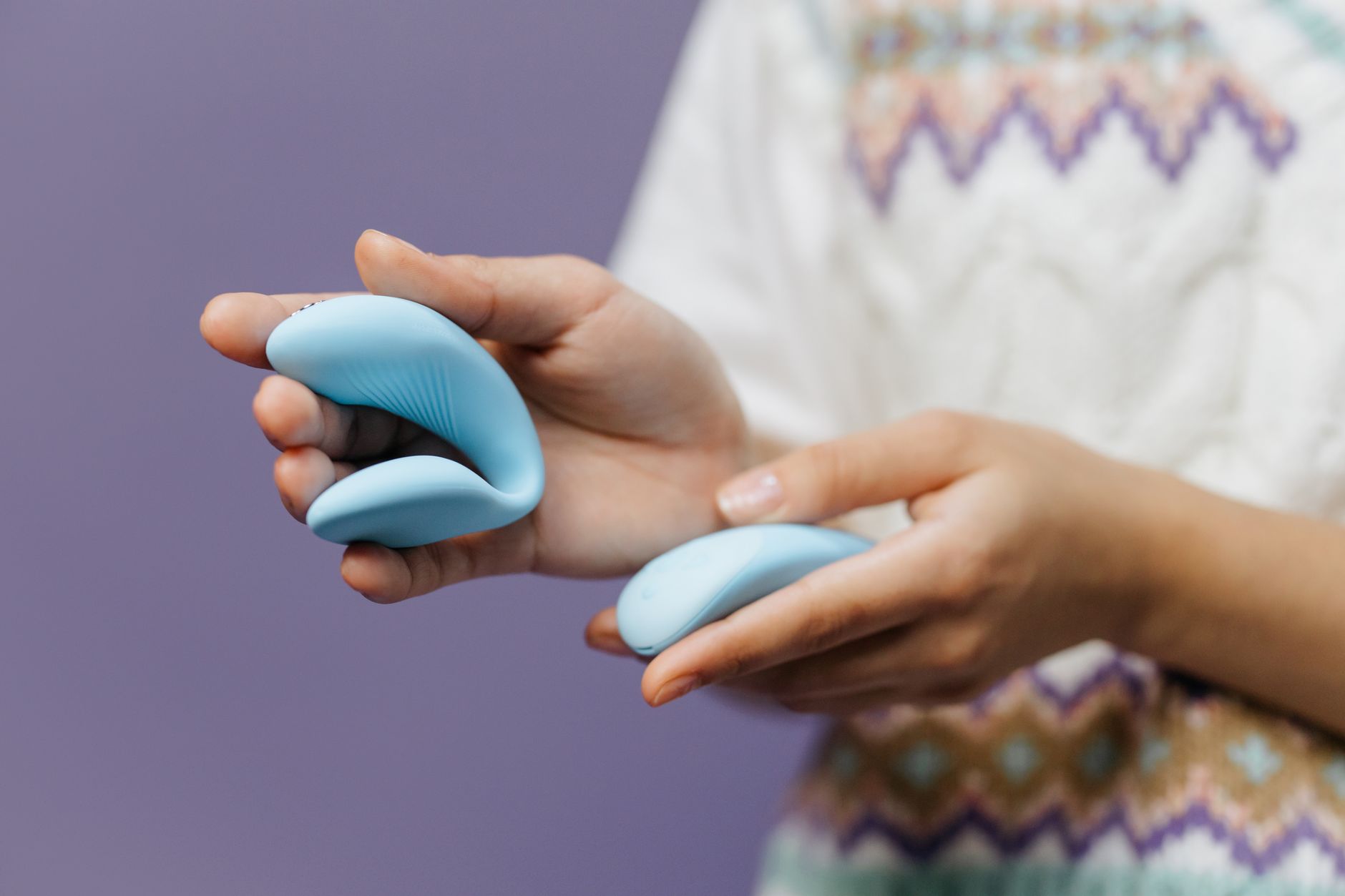
Let's talk about the timeline nobody warns you about
Here's the thing: recovery doesn't come with a calendar. You get the medical all-clear, everyone expects you to bounce back, and then your body (or your mind, or both) says "not yet." Months later, you're still rebuilding what felt automatic before. That includes pleasure, touch, and intimacy.
If you're in that waiting period, the lemon clitoral vibrator might feel like an odd choice. But air-suction toys like the Lem are actually designed for exactly this moment. They don't demand much from you. You control the pace completely. And they meet your body where it actually is, not where you think it should be.
Let me walk you through how to approach this thoughtfully.
Why recovery affects pleasure differently than you'd expect
When you're healing from surgery, illness, or injury, your nervous system is still in protection mode. Even if the physical wound is closed, your brain is running a "caution" program. That affects arousal, sensation, and how your body responds to touch.
Add in fatigue, medication side effects, and the psychological weight of "I should be better by now," and genuine desire often disappears. This isn't failure. It's your nervous system doing exactly what it's supposed to do.
The second thing that shifts is sensation itself. Pain medication, inflammation, and the healing process can dull feeling temporarily. Some people report numbness. Others say sensation feels muted or hyperactive. Both are normal. Both pass, but "pass" might mean weeks or months, not days.

Photo by cottonbro studio on Pexels
Why air-suction toys work differently during recovery
Here's where lemon vibrators shift the conversation. Traditional vibrators require your body to be "ready" for stimulation. They demand focus, physical positioning, and sustained arousal. If you're exhausted, in pain, or emotionally flat, they feel like one more thing your body has to perform.
Air-suction technology, on the other hand, wakes up sensation without demanding endurance. The Lem uses gentle suction pulses that stimulate nerve clusters. You're not waiting for your clit to wake up. The toy is gently coaxing it awake. That's a completely different experience.
It also means you can start and stop instantly. No buildup pressure. No guilt if you need to rest halfway through. You're experimenting, not achieving.
Start with the lowest setting, literally
I know this feels obvious, but it's the most skipped step. If you're used to a stronger toy pre-recovery, the softest patterns on the Lem might feel underwhelming. Use them anyway. Your nervous system has recalibrated. What felt like nothing a year ago might feel like exactly the right amount now.
Start with pattern one for three to five minutes. That's it. Notice what happens. Does your body relax? Does sensation build gradually? Does your mind wander to something else entirely? All of these are information.
Most people in recovery find that they don't need intense sensation to get there. What they need is consistency and permission to be slow.
The permission piece is bigger than you think
Recovery messes with your sense of control. Medical professionals controlled the process. Your body didn't cooperate. Time moved differently than expected. By the time you're ready to think about pleasure again, there's often a tangle of frustration and grief underneath.
Using a lemon clitoral vibrator gives you back some agency. You choose the moment. You choose the duration. You choose when to stop. If pleasure doesn't happen today, you're not fighting against your body. You're just gathering data: "Okay, today isn't the day." That's fine.
Most of my clients find that this specific permission changes everything. It stops pleasure from being another goal to achieve and starts it being something to explore. Ironically, that's when orgasms usually return.
Timing matters more than you'd think
During recovery, your energy isn't stable. Fatigue hits at different times. Pain medication wears off. Emotional resilience fluctuates. Instead of trying to force pleasure into a set schedule, pay attention to your body's natural rhythms.
Do you feel better in the morning? After eating? After a nap? Right before your medication? Track it loosely. Then, when one of those windows opens, that's your moment. Not because you "should," but because your body has signaled it's ready.
Many people also find that using the Lem right before sleep works beautifully. The gentle suction is soothing. It doesn't hype you up. It relaxes your nervous system while giving you something pleasurable to focus on. That combination matters.
When sensation feels weird, that's part of the process
Some people report that sensation feels electric or sharp during recovery. Others say numb. Some describe it as distant, like their body isn't quite theirs yet. All of these are normal neurological responses to healing.
This is where the Lem's versatility helps. You can pause, change the pattern, change the intensity. You're not locked into one sensation. If suction feels too intense today, try a lower pattern. If numbness is the issue, layer in some deep breathing. If it feels foreign, take a break and try again next week.
Listen to your therapist or GP about pain. But about weird sensation that isn't painful? That's you healing. Your nervous system is recalibrating. These toys can help you meet that recalibration with curiosity instead of frustration.
The conversation with your partner (if you have one) matters
If you're rebuilding intimacy as a couple during recovery, this needs its own conversation. Bring the clitoral vibrator into the space not as a solution to your "slow" healing, but as a tool you're both experimenting with. You're learning together what your body needs right now.
Some partners worry that using a toy means they're not enough. That's their anxiety, not your job to manage. But naming it helps. "I'm using this while I heal. This is about me rebuilding connection with my own body. It's not about you or us. It's just about me reclaiming something."
If your partner wants to be involved, that's beautiful. If you need to do this alone first, that's equally valid. Let recovery guide the conversation, not a timeline.
When to push gently forward vs. when to rest
There's a difference between "I'm scared" and "my body needs more time." Learning to feel that difference is crucial. Gentle self-exploration with the Lem can actually help you notice it.
If you're engaging with the toy and sensation is building, you're generally in the pushing-forward zone. Not aggressive pushing, but gentle. If engagement feels flat, your body is sending a signal to rest. Honor it. Next week will come.
Talk to your therapist or doctor if healing is taking significantly longer than expected or if sensation doesn't improve at all. Some recovery complications need professional support. But most people find that their body does eventually wake back up. It just takes patience.
The reset button you might need
Sometimes you'll have a session with the Lem where nothing happens and you feel frustrated. Other times, something small clicks and you feel connected to your body for the first time in months. Both matter. Both are recovery.
If you find yourself forcing it, stop. Put the toy away for a week. Go for walks. Feel the sun. Let your nervous system settle. Recovery isn't linear. There will be plateaus, forward movement, and sometimes steps backward. That's completely normal.
The beautiful part: you have time. You're not on a deadline. Your body will heal at its pace, and when you're ready to rebuild pleasure, the tools are here.
People also ask
How long does it typically take for sensation to return after surgery or illness?
There's no universal timeline. Some people feel shifts within weeks. Others take months or longer. It depends on the type of procedure, whether nerves were involved, your overall health, medication side effects, and how quickly your nervous system downregulates. Working with your healthcare provider helps track if healing is on pace or if something needs attention.
Can I use a lemon clitoral vibrator if I'm still in pain during recovery?
Not in the area that's healing. If abdominal surgery was involved, for example, avoid anything that puts pressure on the scar or surrounding tissue. Once you're cleared for light touch in the genital area, you can start very gently with the Lem on the lowest setting. If pain appears, stop immediately and check with your doctor. Pain during recovery is information, not something to push through.
Is it normal to feel disconnected from my body during recovery?
Completely normal. Surgery and illness can create a sense of embodied disconnection. Your nervous system has been through a lot. Using a toy gently, with no pressure to feel anything specific, can actually help rebuild that connection gradually. You're reminding yourself that your body can feel good again, even if it doesn't right now.
What if I still have no desire months after recovery?
That's worth mentioning to your doctor. Low libido during recovery can be medication side effects, hormonal shifts, emotional processing, or lingering nervous system dysregulation. Sometimes it's all of the above. Professional support helps you figure out which one needs attention first. Therapy alongside medical care is often the most effective approach.
Can I use the Lem if I'm on pain medication?
Generally yes, but check with your doctor. Some pain medications can affect sensation or make you drowsy. Others don't. You might find that exploring pleasure at a different time of day, away from peak medication timing, works better. Listen to your body's signals rather than following a rigid rule.
How do I know if I'm ready to involve my partner in pleasure again?
When you've had at least a few sessions alone with the Lem and felt something shift. Not necessarily an orgasm, just reconnection. Then bring your partner in for something very gentle and low-pressure. Maybe they're present while you use the toy. Maybe it's just touch and conversation. Let recovery set the pace, not expectation.
Recovery is its own kind of intimacy. You're learning your body again, rebuilding trust with sensation, and giving yourself permission to heal on your actual timeline. That takes courage. The Lem is just a tool that makes the journey a little easier. If you want guidance on any part of this process, reach out to us. We're here to help you rebuild at your pace.