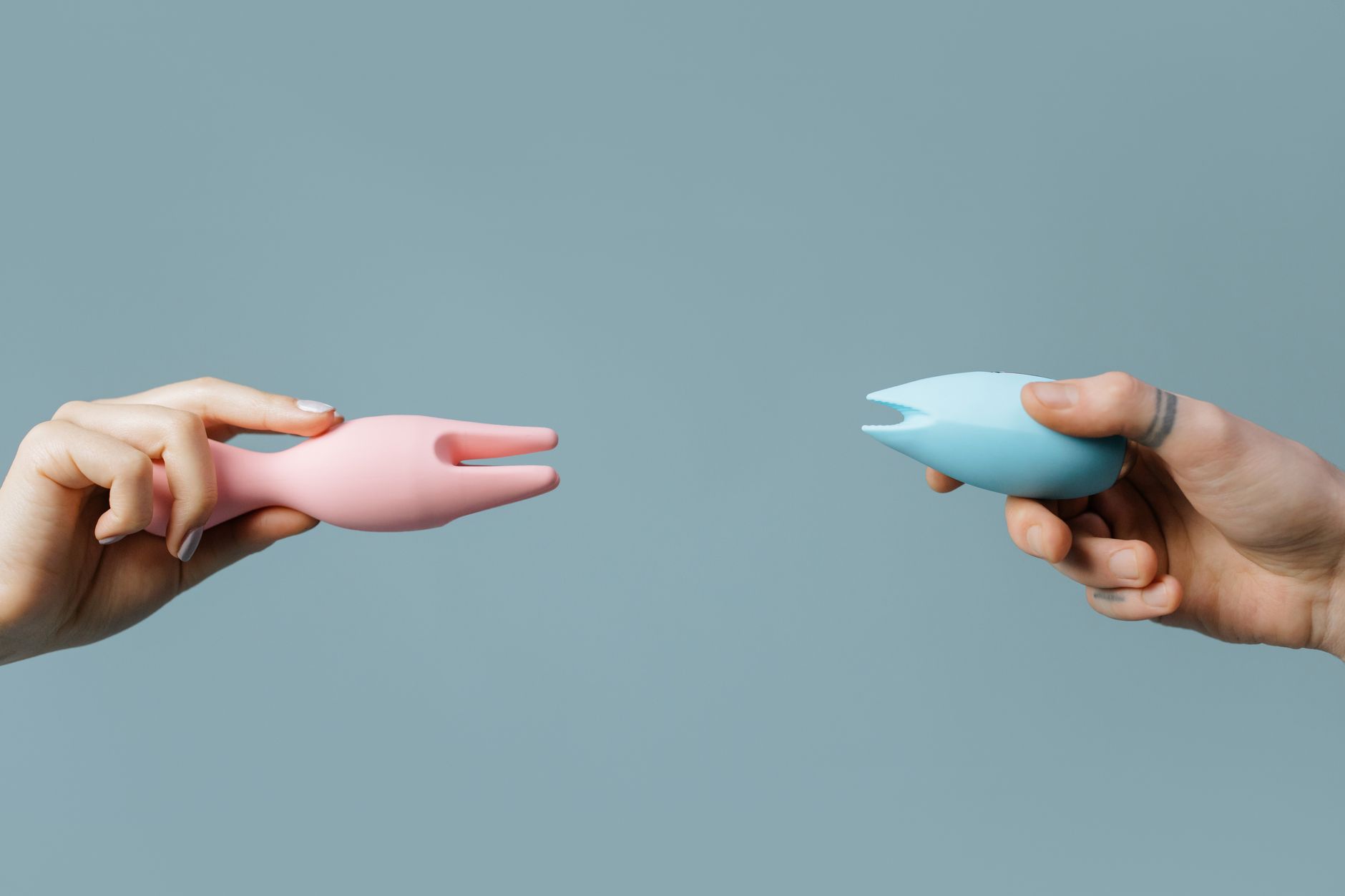
When direct vibration becomes too much
Let's be real: clitoral sensitivity isn't one fixed setting. It changes week to week, day to day, sometimes minute to minute. For some people, traditional vibrators that focus all their energy directly on one tiny nerve cluster feel sharp, overwhelming, or even painful. If that's you, you're not broken. You're also not alone.
The problem with most clitoral vibrators is architectural. They press vibration straight into the tissue. When sensation is already heightened (whether from hormonal shifts, skin sensitivity, or plain old nervous system being cranked), that direct contact can feel too intense. You need diffusion, not concentration.
That's where lemon vibrators work differently. Suction-based stimulation spreads sensation across a wider tissue plane rather than drilling into one spot. The effect is gentler, more enveloping, less spikey.
How suction feels different than vibration
Think of the difference this way: traditional vibrators are a jackhammer. Lemon clitoral vibrators are a wave.
Vibration creates high-frequency micro-movements in one location. When nerves are already sensitized, that frequency feels amplified. Suction, by contrast, creates a gentle seal and rhythmic pulse. The stimulation spreads across the tissue rather than concentrating at a point. It's still powerful. It just doesn't feel sharp.
When someone says a lemon vibrator feels "less intense," they usually don't mean weaker. They mean kinder. The sensation is equally arousing, often equally orgasmic, but without the edge of discomfort.
This matters because overwhelming sensation often kills arousal. Your nervous system goes into protective mode. You tense up. Pleasure becomes something to avoid rather than move toward. A lemon sucker lets you stay relaxed and present instead.
When clitoral sensitivity spikes and why
Clitoral oversensitivity has several common causes. Recognizing yours helps you choose the right approach.
Hormonal fluctuations. In the luteal phase, when progesterone rises, the clitoris becomes more sensitive to touch. Some people find direct vibration uncomfortable during this window. <a href="/en/blog/how-lemon-vibrators-help-during-perimenopause-when-sensation-feels-unpredictable">Hormonal shifts during perimenopause</a> amplify this unevenness significantly. Suction-based stimulation lets you enjoy pleasure without the rawness.
Recovery from regular vibrator use. If you've spent years with the same high-intensity vibrator, your clitoris adapts. When you switch devices, even moderate vibration can feel overwhelming at first. Your nerve endings have been trained to expect a certain input level. The transition period is real, and lemon vibrators help you recalibrate.
Skin conditions. Eczema, psoriasis, or dermatitis on or around the vulva makes direct pressure painful. Suction bypasses the friction problem entirely.
Stress and nervous system dysregulation. When you're anxious, your pelvic floor tightens. Tight tissue amplifies every sensation. Direct vibration feels raw. Suction-based stimulation feels safer.
Medication side effects. Certain antidepressants increase genital sensitivity as part of their action. <a href="/en/blog/how-lemon-vibrators-help-when-arousal-feels-different-after-antidepressants">If medication has changed how stimulation feels</a>, a lemon vibrator can be the bridge to pleasure without discomfort.
How to start if intensity feels like a problem
Three foundational moves:
1. Begin with the lowest suction setting. A lemon vibrator has multiple intensity levels. If your device has a dial or pattern selector, start at level 1 or pattern 1. Spend time here. This is not a rush-through step. Your nervous system needs to learn that suction feels safe.
2. Don't use it directly on the clitoris at first. Position the lemon sucker slightly above the clitoral glans, over the clitoral hood, or to the side. This gives you stimulation without direct pressure. Many people find this positioning more pleasurable anyway because it's less localized.
3. Take your time with arousal. Oversensitivity is often a sign that you're not fully relaxed yet. Budget 15-20 minutes for foreplay before using any toy. A lemon vibrator works better when your body is already turned on.
Building tolerance gradually
If every touch feels too intense, your nervous system is telling you something. Respect that. But you can rebuild comfort.
Start with the sucker on low intensity, positioned off the direct clitoris, for 2-3 minutes max. Stop before it feels bad. Do this every few days for a week. Your nerve endings will start desensitizing in a healthy way.
Then move to direct contact, still on low, for short sessions. Then increase duration. Then explore higher intensities. The progression takes patience, but it works. You're essentially retraining your pleasure circuitry.
Pro tip: Use the same lemon vibrator consistently during this phase. Switching between devices restarts the adaptation process. Stick with one tool for at least two weeks.
The role of lubrication in reducing overwhelm
Drier tissue amplifies sensation. It also increases friction, which can feel uncomfortable if you're already oversensitive.
Water-based lubricant changes everything. It allows the suction cup seal to glide smoothly without the tissue feeling dragged. The sensation becomes fluid rather than sticky. For people with overwhelming clitoral sensitivity, lube is not optional. It's part of your setup.
Apply generously to both your skin and the suction cup opening. Reapply as needed. A lemon vibrator on low intensity with good lubrication often feels like the "just right" amount of stimulation for people who struggle with intensity.
Communication if you're partnered
If a partner is involved, they need to understand that oversensitivity isn't rejection. It's data.
The sentence that helps: "When direct touch feels overwhelming, I need gentler, more diffused stimulation. A lemon vibrator lets me enjoy pleasure without pain." That's it. You're not asking them to do less. You're clarifying what actually works.
If they're using a lemon sucker on you, they should start low and ask for feedback. "Does this intensity feel good?" matters. Your nervous system will tell you when the level is right. Most partners appreciate having clear information instead of guessing.
When to see a provider
If clitoral pain is severe, sudden, or paired with other symptoms (discharge, itching, visible lesions), see a gynecologist. That's not oversensitivity. That's something to treat.
If you've tried low-intensity suction and still feel pain, or if the overwhelm comes with panic or dissociation, talk to a sex therapist or trauma-informed pelvic physical therapist. Sometimes intense sensation sensitivity is rooted in nervous system dysregulation or past trauma. A professional can help you address the underlying cause.
Why lemon vibrators are the solution for sensitive situations
A lemon sucker isn't just "a gentle vibrator." It's a fundamentally different mechanism. The suction approach diffuses stimulation, reduces pressure points, and lets you control intensity more granularly. <a href="/en/blog/why-lemon-vibrators-feel-different-than-regular-vibrators-the-suction-advantage">Understanding how suction differs from traditional vibration</a> helps you make choices that actually fit your body.
Overwhelming clitoral sensation is fixable. Your pleasure isn't broken. You just need the right tool and a little patience.
People also ask
Can I use a lemon vibrator if my clitoris is too sensitive to touch? Yes, but start with the suction cup positioned over the clitoral hood rather than directly on the glans. The diffused suction still provides stimulation without raw contact. Gradually move to direct contact as your sensitivity settles.
How long does it take for clitoral sensitivity to go back to normal? It depends on the cause. Hormonal sensitivity usually shifts within the next cycle. Recovery from vibrator overuse takes 2-4 weeks of gradual retraining. Medication-related sensitivity may take several weeks to months. Be patient with your body.
Is overwhelming clitoral sensation a sign of an infection or STI? Maybe. If sensitivity arrived suddenly, is accompanied by discharge, odor, itching, or visible changes, see a gynecologist. If it came gradually and isn't paired with other symptoms, it's usually hormonal or nerve-related. Either way, a provider can rule out infection.
Can I make a regular vibrator feel less intense? You can try using it over clothing or through a layer of fabric, but that's a workaround, not a solution. A lemon vibrator is designed for diffused stimulation from the ground up. It's a better match for sensitive situations.
Does lube reduce clitoral sensation? No. For people with oversensitivity, lube reduces friction and discomfort while keeping sensation intact. It actually makes pleasure more accessible.
What if even the lowest suction setting still feels too intense? Lubrication helps significantly. If that doesn't work, suction-based toys might not be your match right now. Focus on foreplay, lower-intensity methods like hands or wands on low settings, or reach out to a sex therapist to explore what's driving the sensitivity.
Summary
Clitoral oversensitivity is real, and it doesn't mean your pleasure is broken. It means you need diffused, controlled stimulation instead of concentrated pressure. Lemon vibrators deliver exactly that through suction-based technology. Start low, position away from direct contact, use lube, and give your nervous system time to adjust. Most people find their sweet spot within a few weeks. Your pleasure deserves tools that fit your actual body, not someone else's default setting.